

File size: 12,524 Bytes
1aef529 92bb240 1aef529 92bb240 1aef529 92bb240 1aef529 92bb240 10a22e6 92bb240 10a22e6 1aef529 10a22e6 1aef529 10a22e6 1aef529 7c2250a 10a22e6 92bb240 1aef529 10a22e6 1aef529 10a22e6 7c2250a 10a22e6 92bb240 10a22e6 7c2250a 10a22e6 8c83e97 10a22e6 7c2250a 10a22e6 8c83e97 10a22e6 8c83e97 10a22e6 8c83e97 10a22e6 8c83e97 10a22e6 8c83e97 10a22e6 7c2250a 10a22e6 1aef529 7c2250a 1aef529 8c83e97 1aef529 10a22e6 1aef529 10a22e6 1aef529 8c83e97 1aef529 8c83e97 92bb240 1aef529 10a22e6 7c2250a 10a22e6 1aef529 92bb240 1aef529 92bb240 1aef529 92bb240 1aef529 92bb240 1aef529 92bb240 8c83e97 c42f52e 1aef529 92bb240 1aef529 7c2250a 92bb240 1aef529 7c2250a | 1 2 3 4 5 6 7 8 9 10 11 12 13 14 15 16 17 18 19 20 21 22 23 24 25 26 27 28 29 30 31 32 33 34 35 36 37 38 39 40 41 42 43 44 45 46 47 48 49 50 51 52 53 54 55 56 57 58 59 60 61 62 63 64 65 66 67 68 69 70 71 72 73 74 75 76 77 78 79 80 81 82 83 84 85 86 87 88 89 90 91 92 93 94 95 96 97 98 99 100 101 102 103 104 105 106 107 108 109 110 111 112 113 114 115 116 117 118 119 120 121 122 123 124 125 126 127 128 129 130 131 132 133 134 135 136 137 138 139 140 141 142 143 144 145 146 147 148 149 150 151 152 153 154 155 156 157 158 159 160 161 162 163 164 165 166 167 168 169 170 171 172 173 174 175 176 177 178 179 180 181 182 183 184 185 186 187 188 189 190 191 192 193 194 195 196 197 198 199 200 201 202 203 204 205 206 207 208 209 210 211 212 213 214 215 216 217 218 219 220 221 222 223 224 225 226 227 228 229 230 231 232 233 234 235 236 237 238 239 240 241 242 243 244 245 246 247 248 249 250 251 252 253 254 255 256 257 258 259 260 261 262 263 264 265 266 267 268 269 270 271 272 273 274 275 276 277 278 279 280 281 282 283 284 285 286 287 288 289 290 291 292 293 294 295 296 297 298 299 300 301 302 303 304 305 306 307 308 309 310 311 312 313 314 315 316 317 318 319 320 321 322 323 324 325 326 327 328 329 330 331 332 333 334 | ---
library_name: transformers
license: "mit"
tags:
- protein-language-model
- fastplms
---
<!-- Generated from src/fastplms/models.toml. Do not edit. -->
# ESMFold2-Experimental-Cutoff2025
## Model overview
`Synthyra/ESMFold2-Experimental-Cutoff2025` packages the
`biohub/ESMFold2-Experimental-Cutoff2025` checkpoint with the FastPLMs runtime
for Hugging Face Transformers. It accepts raw amino-acid sequences or typed
molecular-complex specifications; low-level forward accepts prepared feature
tensors.
The repository uses the standard Transformers loading interface with
`trust_remote_code=True`. See Technical details for each registered class and
whether its weights come from the checkpoint.
The sequence- and token-classification classes reuse the pretrained backbone,
but their task heads are newly initialized. Fine-tune those heads before
interpreting their logits as predictions.
## Install and platform requirements
Install the direct dependencies published with this model:
```bash
python -m pip install -r \
"https://huggingface.co/Synthyra/ESMFold2-Experimental-Cutoff2025/resolve/main/requirements.txt"
```
The FastPLMs implementation itself is embedded in the model repository.
Transformers loads it through `trust_remote_code=True`.
This model requires Python 3.11-3.14, PyTorch 2.13, and Transformers 5.13.
The artifact requirements include the structure dependencies.
The release contract requires a CUDA device. The current validated target is
the exact NVIDIA GH200 on Linux aarch64. Linux x86-64, CPU-only, Windows, and
macOS structure runs are not release evidence.
The Hub quick start needs network access for the first download. For an
air-gapped run, build the manifest-pinned local artifact first and use the
offline example.
## Quick start
```python
from transformers import AutoModel
model_id = "Synthyra/ESMFold2-Experimental-Cutoff2025"
model = AutoModel.from_pretrained(
model_id,
trust_remote_code=True,
attn_implementation="sdpa",
).eval()
```
For offline validation, replace `model_id` with the manifest-built
`dist/hub/ESMFold2-Experimental-Cutoff2025` path. Pass `local_files_only=True`.
## Attention backends
The quick start uses `sdpa`.
Available backends are `eager`, `sdpa`, `flex_attention`. Requesting an
unavailable backend raises instead of silently changing implementation.
`output_attentions=True` can use the documented one-call eager fallback to
materialize attention tensors. The configured backend does not change.
## Downstream prediction
The sequence and token prediction AutoClasses use the checkpoint backbone and
create a new, untrained `classifier`. Sequence labels have shape `(b,)`.
Residue labels have shape `(b, l)` and use `-100` outside biological positions.
The folding trunk is skipped. The classifier uses the checkpoint's learned pLM
state mixture and projection, followed by one trainable transformer probe.
```python
import torch
from transformers import (
AutoModelForSequenceClassification,
AutoModelForTokenClassification,
)
model_id = "Synthyra/ESMFold2-Experimental-Cutoff2025"
sequence_model = AutoModelForSequenceClassification.from_pretrained(
model_id, num_labels=2, trust_remote_code=True
).eval()
token_model = AutoModelForTokenClassification.from_pretrained(
model_id, num_labels=3, trust_remote_code=True
).eval()
sequences = ["MSTNPKPQRKTKRNT", "MKTIIALSYIFCLVFA"]
batch = sequence_model.prepare_classifier_inputs(sequences)
biological = batch["attention_mask"].bool()
sequence_labels = torch.zeros(len(sequences), dtype=torch.long)
token_labels = torch.full_like(batch["input_ids"], -100)
token_labels[biological] = 0
with torch.inference_mode():
sequence_output = sequence_model(**batch, labels=sequence_labels)
token_output = token_model(**batch, labels=token_labels)
print(sequence_output.logits.shape) # (b, 2)
print(token_output.logits.shape) # (b, l, 3)
```
## PEFT fine-tuning
Install the training dependencies. Then attach LoRA to the loaded checkpoint:
```bash
python -m pip install "datasets>=4.8,<5" "peft>=0.19,<0.20"
```
```python
from peft import LoraConfig, TaskType, get_peft_model
peft_model = get_peft_model(
sequence_model,
LoraConfig(
task_type=TaskType.SEQ_CLS,
r=8,
lora_alpha=16,
target_modules="all-linear",
modules_to_save=["classifier"],
),
)
```
This checkpoint advertises a classification head. Save the separately trained
`classifier` with the adapter.
All FastPLMs checkpoints follow the Transformers `PreTrainedModel` contract and
can use PEFT. The ESM2-specific shipped CLI is an example, not a
support boundary. Record the target modules, base revision, data identity, and
trainable parameter scope.
## Alignment-conditioning contract
This is a full 48-block ESMFold2 checkpoint. It supports single-sequence
inference and optional MSA-conditioned inference. Typed multichain and
multimolecule inputs can attach an MSA to each applicable protein chain.
## Protein folding
The single-protein helper returns typed structure and confidence outputs:
```python
result = model.fold_protein(
"MSTNPKPQRKTKRNT",
num_loops=1,
num_sampling_steps=200,
num_diffusion_samples=1,
seed=7,
)
pdb_text = model.result_to_pdb(result)
cif_text = model.result_to_cif(result)
print(result.ptm, result.plddt.mean().item())
```
No target structure is required. For complexes, construct the input from the
types exposed by the loaded artifact:
```python
types = model.input_types
complex_input = types.StructurePredictionInput(
sequences=[
types.ProteinInput(id="A", sequence="MSTNPKPQRKTKRNT"),
types.ProteinInput(id="B", sequence="MKTIIALSYIFCLVFA"),
types.DNAInput(id="C", sequence="ATGC"),
types.LigandInput(id="L", smiles="O"),
]
)
complex_result = model.fold(
complex_input,
num_loops=1,
num_sampling_steps=200,
seed=7,
)
print(complex_result.ptm, complex_result.plddt.mean().item())
```
The typed interface also supports RNA, protein MSAs, modifications, and covalent
bonds. The public schema recognizes `PocketConditioning` and
`DistogramConditioning`, but the pinned official forward consumes neither. Its
feature builder hard-codes a zero pocket feature and constructs distogram tensors
that the released model ignores. FastPLMs therefore rejects non-null pocket and
distogram conditioning instead of silently ignoring scientific inputs. Prepared
`ref_pos` values are component reference geometries created during featurization,
not target coordinates.
Predicted coordinates and confidence scores are outputs and do not establish
biochemical activity.
## Learned representation and ESMC precision
ESMFold2 applies its learned state mixture and projection as
`H: (b, l, 81, 2560) -> Z: (b, l, 256)`. Retrieve `Z` through the public
embedding API:
```python
representations = model.embed_dataset(
["MSTNPKPQRKTKRNT", "MKTIIALSYIFCLVFA"],
batch_size=2,
full_embeddings=True,
)
print(representations[0].tensor.shape) # (sequence_length, 256)
```
`model.embed_dataset(..., full_embeddings=True)` returns one `(l, 256)` residue
tensor per single-chain input. It rejects complexes, ligands, MSAs,
chain-separated inputs, `cls`, and `parti` in the embedding path.
Set `esmc_precision` to `auto`, `bf16`, `fp32`, or `fp8` when loading.
`auto` always resolves to BF16. Explicit FP8 is experimental, inference-only,
and strict:
```python
model.reload_esmc(precision="fp8", device="cuda:0")
print(model.esmc_precision_status)
```
FP8 raises when the validated CUDA and Transformer Engine path is unavailable.
Canonical BF16 weights are retained, and transient quantization state is never
serialized.
The ESMC backbone uses SDPA as the recommended highest-fidelity path. Flex
Attention is supported and non-experimental but can be numerically divergent;
ESMFold2 does not advertise FlashAttention for the folding interface.
| Backend | Support | Measurement status |
| --- | --- | --- |
| `sdpa` | Recommended fidelity path | Pending release measurement |
| `eager` | Supported | Pending release measurement |
| `flex_attention` | Supported, numerically divergent | Pending release measurement |
Detailed backend measurements, release guardrails, and the GH200 package
compatibility exception are maintained in the
[attention backend guide](https://github.com/Synthyra/FastPLMs/blob/main/docs/attention_backends.md)
and
[release evidence manifest](https://github.com/Synthyra/FastPLMs/blob/main/docs/generated/capability_evidence.md).
## Verified CCD runtime asset
Structure preparation requires `ccd.pkl` from
`biohub/ESMFold2`. The manifest pins its repository, revision, size, content
identity, and MIT terms. This is a trusted-deserialization boundary. FastPLMs
accepts only the pinned snapshot link inside the repository blob directory.
User-supplied asset and `cache_dir` symlinks are rejected. The loader verifies a
private temporary snapshot before deserialization, protecting against
path-replacement and in-place source-write races. Offline execution requires the
exact cached object and never downloads a replacement.
## Test-time training
This experimental checkpoint does not expose folding TTT. Use the corresponding
standard or Fast checkpoint when you need opt-in ESMC-backbone adaptation.
## Binder-design research example
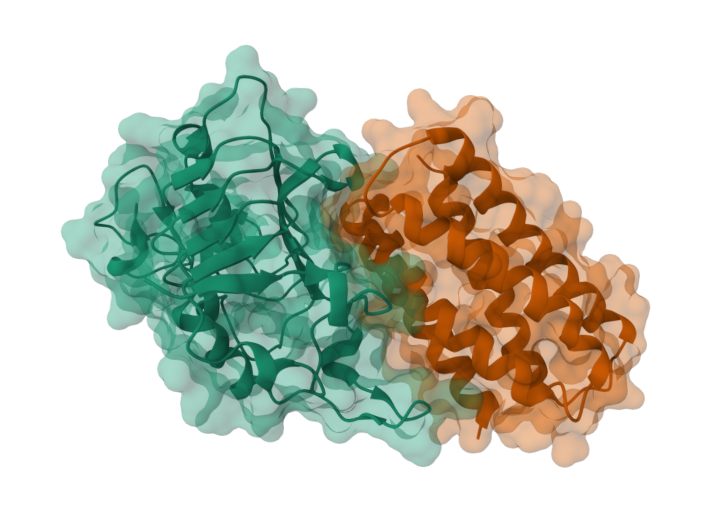
The FastPLMs binder-design workflow uses the experimental Fast Cutoff2025
checkpoint for differentiable inversion, both experimental Cutoff2025
checkpoints as critics, and ESM++ as the sequence prior:
```bash
python examples/binder_design_fastplms.py \
--target-name pd-l1 \
--binder-name minibinder \
--batch-size 4 \
--steps 150 \
--output-dir artifacts/binder-design
```
The workflow ranks candidates by mean iPTM across the approved critics after
the minibinder isoelectric-point filter. These are model-based prioritization
signals, not experimental evidence of affinity or specificity. See the
[complete workflow](https://github.com/Synthyra/FastPLMs/blob/main/docs/binder_design.md).
## Technical details
- Inputs: Raw amino-acid sequences or typed molecular-complex specifications; low-level forward accepts prepared feature tensors
- Transformers classes: `AutoConfig`, `AutoModel`, `AutoModelForSequenceClassification`, `AutoModelForTokenClassification`
- Checkpoint weights: `AutoConfig` = `FastPLMs extension`, `AutoModel` = `pretrained`, `AutoModelForSequenceClassification` = `base weights + untrained task head`, `AutoModelForTokenClassification` = `base weights + untrained task head`
- Attention backends: `eager`, `sdpa`, `flex_attention`
- Precision: `auto`, `fp32`, `bf16`, `fp8` (experimental)
- BF16 execution: `fp32_parameters_autocast`
- Generation contract: `not_applicable`
- Dependencies: `core + structure`
- Weight publication allowed: `true`
- Weight license status: `resolved`
- Redistributable: `true`
- Complete weight publication required: `false`
## Validation and provenance
FastPLMs pins the checkpoint, upstream source revisions, state transformation,
and required files in `models.toml`. Built artifacts record exact source
identities and conversion details in `source-record.json`.
- FastPLMs checkpoint: `Synthyra/ESMFold2-Experimental-Cutoff2025`
- Runtime revision: recorded separately in the built artifact and published commit
- Runtime source identities: recorded in `source-record.json`
- Official checkpoint: `biohub/ESMFold2-Experimental-Cutoff2025`
- Artifact source: `fast`
- State transform: `identity`
- Pinned upstreams: `biohub-esm`, `biohub-transformers`, `protein-ttt`
- Release tiers: `check`, `compliance`, `structure`, `feature`, `artifact`, `benchmark`
- Unresolved required file identities: `0`
Release validation includes the `compliance` tier. Its evidence identifies the
checkpoint, backend, dtype, hardware, inputs, and reference revision.
Declared tiers compare configuration, tokenizer behavior, state, and
representative inference with the pinned reference. A nonzero unresolved count
blocks release. Metadata alone does not show that a build passed, that a backend
is faster, or that an output is biologically valid.
## License
Checkpoint terms: MIT. The Hub model-card identifier is
`mit`. The local artifact contains applicable source
licenses, notices, attribution, and conversion records. Review them before use.
|