

File size: 11,325 Bytes
8a551e6 | 1 2 3 4 5 6 7 8 9 10 11 12 13 14 15 16 17 18 19 20 21 22 23 24 25 26 27 28 29 30 31 32 33 34 35 36 37 38 39 40 41 42 43 44 45 46 47 48 49 50 51 52 53 54 55 56 57 58 59 60 61 62 63 64 65 66 67 68 69 70 71 72 73 74 75 76 77 78 79 80 81 82 83 84 85 86 87 88 89 90 91 92 93 94 95 96 97 98 99 100 101 102 103 104 105 106 107 108 109 110 111 112 113 114 115 116 117 118 119 120 121 122 123 124 125 126 127 128 129 130 131 132 133 134 135 136 137 138 139 140 141 142 143 144 145 146 147 148 149 150 151 152 153 154 155 156 157 158 159 160 161 162 163 164 165 166 167 168 169 | # The $4^{\text {th }}$ Romanian Master of Mathematics Competition - Solutions Day 1: Friday, February 25, 2011, Bucharest
Problem 1. Prove that there exist two functions
$$
f, g: \mathbb{R} \rightarrow \mathbb{R}
$$
such that $f \circ g$ is strictly decreasing, while $g \circ f$ is strictly increasing.
(Poland) Andrzej KomisArsKi \& Marcin Kuczma
## Solution. Let
$$
\begin{aligned}
& \cdot A=\bigcup_{k \in \mathbb{Z}}\left(\left[-2^{2 k+1},-2^{2 k}\right) \bigcup\left(2^{2 k}, 2^{2 k+1}\right]\right) \\
& \cdot B=\bigcup_{k \in \mathbb{Z}}\left(\left[-2^{2 k},-2^{2 k-1}\right) \bigcup\left(2^{2 k-1}, 2^{2 k}\right]\right)
\end{aligned}
$$
Thus $A=2 B, B=2 A, A=-A, B=-B, A \cap B=\varnothing$, and finally $A \cup B \cup\{0\}=\mathbb{R}$. Let us take
$$
f(x)=\left\{\begin{array}{lll}
x & \text { for } & x \in A \\
-x & \text { for } & x \in B \\
0 & \text { for } & x=0
\end{array}\right.
$$
Take $g(x)=2 f(x)$. Thus $f(g(x))=f(2 f(x))=-2 x$ and $g(f(x))=2 f(f(x))=2 x$.
Problem 2. Determine all positive integers $n$ for which there exists a polynomial $f(x)$ with real coefficients, with the following properties:
(1) for each integer $k$, the number $f(k)$ is an integer if and only if $k$ is not divisible by $n$;
(2) the degree of $f$ is less than $n$.
(Hungary) GÉza Kós
Solution. We will show that such polynomial exists if and only if $n=1$ or $n$ is a power of a prime.
We will use two known facts stated in Lemmata 1 and 2.
Lemma 1. If $p^{a}$ is a power of a prime and $k$ is an integer, then $\frac{(k-1)(k-2) \ldots\left(k-p^{a}+1\right)}{\left(p^{a}-1\right)!}$ is divisible by $p$ if and only if $k$ is not divisible by $p^{a}$.
Proof. First suppose that $p^{a} \mid k$ and consider
$$
\frac{(k-1)(k-2) \cdots\left(k-p^{a}+1\right)}{\left(p^{a}-1\right)!}=\frac{k-1}{p^{a}-1} \cdot \frac{k-2}{p^{a}-2} \cdots \frac{k-p^{a}+1}{1}
$$
In every fraction on the right-hand side, $p$ has the same maximal exponent in the numerator as in the denominator.
Therefore, the product (which is an integer) is not divisible by $p$.
Now suppose that $p^{a} \nmid k$. We have
$$
\frac{(k-1)(k-2) \cdots\left(k-p^{a}+1\right)}{\left(p^{a}-1\right)!}=\frac{p^{a}}{k} \cdot \frac{k(k-1) \cdots\left(k-p^{a}+1\right)}{\left(p^{a}\right)!} .
$$
The last fraction is an integer. In the fraction $\frac{p^{a}}{k}$, the denominator $k$ is not divisible by $p^{a}$.
Lemma 2. If $g(x)$ is a polynomial with degree less than $n$ then
$$
\sum_{\ell=0}^{n}(-1)^{\ell}\binom{n}{\ell} g(x+n-\ell)=0
$$
Proof. Apply induction on $n$. For $n=1$ then $g(x)$ is a constant and
$$
\binom{1}{0} g(x+1)-\binom{1}{1} g(x)=g(x+1)-g(x)=0
$$
Now assume that $n>1$ and the Lemma holds for $n-1$. Let $h(x)=g(x+1)-g(x)$; the degree of $h$ is less than the degree of $g$, so the induction hypothesis applies for $g$ and $n-1$ :
$$
\begin{gathered}
\sum_{\ell=0}^{n-1}(-1)^{\ell}\binom{n-1}{\ell} h(x+n-1-\ell)=0 \\
\sum_{\ell=0}^{n-1}(-1)^{\ell}\binom{n-1}{\ell}(g(x+n-\ell)-g(x+n-1-\ell))=0 \\
\binom{n-1}{0} g(x+n)+\sum_{\ell=1}^{n-1}(-1)^{\ell}\left(\binom{n-1}{\ell-1}+\right. \\
\left.\binom{n-1}{\ell}\right) g(x+n-\ell)-(-1)^{n-1}\binom{n-1}{n-1} g(x)=0 \\
\sum_{\ell=0}^{n}(-1)^{\ell}\binom{n}{\ell} g(x+n-\ell)=0
\end{gathered}
$$
Lemma 3. If $n$ has at least two distinct prime divisors then the greatest common divisor of $\binom{n}{1},\binom{n}{2}, \ldots,\binom{n}{n-1}$ is 1 .
Proof. Suppose to the contrary that $p$ is a common prime divisor of $\binom{n}{1}, \ldots,\binom{n}{n-1}$. In particular, $p \left\lvert\,\binom{ n}{1}=n\right.$. Let $a$ be the exponent of $p$ in the prime factorization of $n$. Since $n$ has at least two prime divisors, we have $1<p^{a}<n$. Hence, $\binom{n}{p^{a}-1}$ and $\binom{n}{p^{a}}$ are listed among $\binom{n}{1}, \ldots,\binom{n}{n-1}$ and thus $p \left\lvert\,\binom{ n}{p^{a}}\right.$ and $p \left\lvert\,\binom{ n}{p^{a}-1}\right.$. But then $p$ divides $\binom{n}{p^{a}}-\binom{n}{p^{a}-1}=\binom{n-1}{p^{a}-1}$, which contradicts Lemma 1.
Next we construct the polynomial $f(x)$ when $n=1$ or $n$ is a power of a prime.
For $n=1, f(x)=\frac{1}{2}$ is such a polynomial.
If $n=p^{a}$ where $p$ is a prime and $a$ is a positive integer then let
$$
f(x)=\frac{1}{p}\binom{x-1}{p^{a}-1}=\frac{1}{p} \cdot \frac{(x-1)(x-2) \cdots\left(x-p^{a}+1\right)}{\left(p^{a}-1\right)!} .
$$
The degree of this polynomial is $p^{a}-1=n-1$.
The number $\frac{(k-1)(k-2) \cdots\left(k-p^{a}+1\right)}{\left(p^{a}-1\right)!}$ is an integer for any integer $k$, and, by Lemma 1 , it is divisible by $p$ if and only if $k$ is not divisible by $p^{a}=n$.
Finally we prove that if $n$ has at least two prime divisors then no polynomial $f(x)$ satisfies $(1,2)$. Suppose that some polynomial $f(x)$ satisfies (1,2), and apply Lemma 2 for $g=f$ and $x=-k$ where $1 \leq k \leq n-1$. We get that
$$
\binom{n}{k} f(0)=\sum_{0 \leq \ell \leq n, \ell \neq k}(-1)^{k-\ell}\binom{n}{\ell} f(-k+\ell)
$$
Since $f(-k), \ldots, f(-1)$ and $f(1), \ldots, f(n-k)$ are all integers, we conclude that $\binom{n}{k} f(0)$ is an integer for every $1 \leq k \leq n-1$.
By dint of Lemma 3, the greatest common divisor of $\binom{n}{1},\binom{n}{2}, \ldots,\binom{n}{n-1}$ is 1 . Hence, there will exist some integers $u_{1}, u_{2}, \ldots, u_{n-1}$ for which $u_{1}\binom{n}{1}+\cdots+u_{n-1}\binom{n}{n-1}=1$. Then
$$
f(0)=\left(\sum_{k=1}^{n-1} u_{k}\binom{n}{k}\right) f(0)=\sum_{k=1}^{n-1} u_{k}\binom{n}{k} f(0)
$$
is a sum of integers. This contradicts the fact that $f(0)$ is not an integer. So such polynomial $f(x)$ does not exist.
Alternative Solution. (I. Bogdanov) We claim the answer is $n=p^{\alpha}$ for some prime $p$ and nonnegative $\alpha$.
Lemma. For every integers $a_{1}, \ldots, a_{n}$ there exists an integervalued polynomial $P(x)$ of degree $<n$ such that $P(k)=a_{k}$ for all $1 \leq k \leq n$.
Proof. Induction on $n$. For the base case $n=1$ one may set $P(x)=a_{1}$. For the induction step, suppose that the polynomial $P_{1}(x)$ satisfies the desired property for all $1 \leq k \leq n-1$. Then set $P(x)=P_{1}(x)+\left(a_{n}-P_{1}(n)\right)\binom{x-1}{n-1}$; since $\binom{k-1}{n-1}=0$ for $1 \leq k \leq n-1$ and $\binom{n-1}{n-1}=1$, the polynomial $P(x)$ is a sought one.
Now, if for some $n$ there exists some polynomial $f(x)$ satisfying the problem conditions, one may choose some integer-valued polynomial $P(x)$ (of degree $<n-1$ ) coinciding with $f(x)$ at points $1, \ldots, n-1$. The difference $f_{1}(x)=$ $f(x)-P(x)$ also satisfies the problem conditions, therefore we may restrict ourselves to the polynomials vanishing at points $1, \ldots, n-1-$ that are, the polynomials of the form $f(x)=c \prod_{i=1}^{n-1}(x-i)$ for some (surely rational) constant $c$.
Let $c=p / q$ be its irreducible form, and $q=\prod_{j=1}^{d} p_{j}^{\alpha_{j}}$ be the prime decomposition of the denominator.
1. Assume that a desired polynomial $f(x)$ exists. Since $f(0)$ is not an integer, we have $9 \nmid(-1)^{n-1}(n-1)$ ! and hence $p_{j}^{\alpha_{j}} \nmid(-1)^{n-1}(n-1)$ ! for some $j$. Hence
$$
\prod_{i=1}^{n-1}\left(p_{j}^{\alpha_{j}}-i\right) \equiv(-1)^{n-1}(n-1)!\not \equiv 0 \quad\left(\bmod p_{j}^{\alpha_{j}}\right)
$$
therefore $f\left(p_{i}^{\alpha_{i}}\right)$ is not integer, too. By the condition (i), this means that $n \mid p_{i}^{\alpha_{i}}$, and hence $n$ should be a power of a prime.
2. Now let us construct a desired polynomial $f(x)$ for any power of a prime $n=p^{\alpha}$. We claim that the polynomial
$$
f(x)=\frac{1}{p}\binom{x-1}{n-1}=\frac{n}{p x}\binom{x}{n}
$$
fits. Actually, consider some integer $x$. From the first representation, the denominator of the irreducible form of $f(x)$ may be 1 or $p$ only. If $p^{\alpha} \nmid x$, then the prime decomposition of the fraction $n /(p x)$ contains $p$ with a nonnegative exponent; hence $f(x)$ is integer. On the other hand, if $n=p^{\alpha} \mid x$, then the numbers $x-1, x-2, \ldots, x-(n-1)$ contain the same exponents of primes as the numbers $n-1, n-2, \ldots, 1$ respectively; hence the number
$$
\binom{x-1}{n-1}=\frac{\prod_{i=1}^{n-1}(x-i)}{\prod_{i=1}^{n-1}(n-i)}
$$
is not divisible by $p$. Thus $f(x)$ is not an integer.
Problem 3. A triangle $A B C$ is inscribed in a circle $\omega$. A variable line $\ell$ chosen parallel to $B C$ meets segments $A B$, $A C$ at points $D, E$ respectively, and meets $\omega$ at points $K, L$ (where $D$ lies between $K$ and $E$ ). Circle $\gamma_{1}$ is tangent to the segments $K D$ and $B D$ and also tangent to $\omega$, while circle $\gamma_{2}$ is tangent to the segments $L E$ and $C E$ and also tangent to $\omega$. Determine the locus, as $\ell$ varies, of the meeting point of the common inner tangents to $\gamma_{1}$ and $\gamma_{2}$.
(Russia) VASily Mokin \& Fedor IvLev
Solution. Let $P$ be the meeting point of the common inner tangents to $\gamma_{1}$ and $\gamma_{2}$. Also, let $b$ be the angle bisector of $\angle B A C$. Since $K L \| B C, b$ is also the angle bisector of $\angle K A L$.
Let $\mathfrak{H}$ be the composition of the symmetry $\mathfrak{S}$ with respect to $b$ and the inversion $\mathfrak{I}$ of centre $A$ and ratio $\sqrt{A K \cdot A L}$ (it is readily seen that $\mathfrak{S}$ and $\mathfrak{I}$ commute, so since $\mathfrak{S}^{2}=\mathfrak{I}^{2}=$ id, then also $\mathfrak{H}^{2}=\mathrm{id}$, the identical transformation). The elements of the configuration interchanged by $\mathfrak{H}$ are summarized in Table I.
Let $O_{1}$ and $O_{2}$ be the centres of circles $\gamma_{1}$ and $\gamma_{2}$. Since the circles $\gamma_{1}$ and $\gamma_{2}$ are determined by their construction (in a unique way), they are interchanged by $\mathfrak{H}$, therefore the rays $A O_{1}$ and $A O_{2}$ are symmetrical with respect
to $b$. Denote by $\rho_{1}$ and $\rho_{2}$ the radii of $\gamma_{1}$ and $\gamma_{2}$. Since $\angle O_{1} A B=\angle O_{2} A C$, we have $\rho_{1} / \rho_{2}=A O_{1} / A O_{2}$. On the other hand, from the definition of $P$ we have $O_{1} P / O_{2} P=$ $\rho_{1} / \rho_{2}=A O_{1} / A O_{2}$; this means that $A P$ is the angle bisector of $\angle O_{1} A O_{2}$ and therefore of $\angle B A C$.
The limiting, degenerated, cases are when the parallel line passes through $A$ - when $P$ coincides with $A$; respectively when the parallel line is $B C$ - when $P$ coincides with the foot $A^{\prime} \in B C$ of the angle bisector of $\angle B A C$ (or any other point on $B C$ ). By continuity, any point $P$ on the open segment $A A^{\prime}$ is obtained for some position of the parallel, therefore the locus is the open segment $A A^{\prime}$ of the angle bisector $b$ of $\angle B A C$.
| point $K$ | $\longleftrightarrow$ | point $L$ |
| :---: | :---: | :---: |
| line $K L$ | $\longleftrightarrow$ | circle $\omega$ |
| ray $A B$ | $\longleftrightarrow$ | ray $A C$ |
| point $B$ | $\longleftrightarrow$ | point $E$ |
| point $C$ | $\longleftrightarrow$ | point $D$ |
| segment $B D$ | $\longleftrightarrow$ | segment $E C$ |
| $\operatorname{arc} B K$ | $\longleftrightarrow$ | segment $E L$ |
| $\operatorname{arc} C L$ | $\longleftrightarrow$ | segment $D K$ |
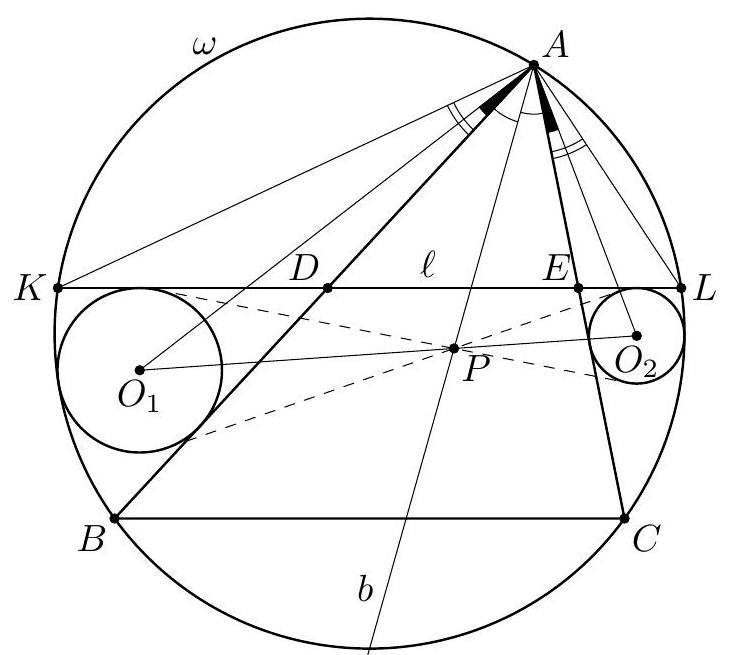
TABLE I: Elements interchanged by $\mathfrak{H}$.
|