new

Get trending papers in your email inbox!

Subscribe

Daily Papers

byAK and the research community

Jun 1

Light Sampling Field and BRDF Representation for Physically-based Neural Rendering

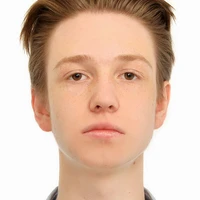
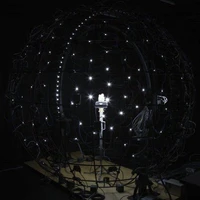
Physically-based rendering (PBR) is key for immersive rendering effects used widely in the industry to showcase detailed realistic scenes from computer graphics assets. A well-known caveat is that producing the same is computationally heavy and relies on complex capture devices. Inspired by the success in quality and efficiency of recent volumetric neural rendering, we want to develop a physically-based neural shader to eliminate device dependency and significantly boost performance. However, no existing lighting and material models in the current neural rendering approaches can accurately represent the comprehensive lighting models and BRDFs properties required by the PBR process. Thus, this paper proposes a novel lighting representation that models direct and indirect light locally through a light sampling strategy in a learned light sampling field. We also propose BRDF models to separately represent surface/subsurface scattering details to enable complex objects such as translucent material (i.e., skin, jade). We then implement our proposed representations with an end-to-end physically-based neural face skin shader, which takes a standard face asset (i.e., geometry, albedo map, and normal map) and an HDRI for illumination as inputs and generates a photo-realistic rendering as output. Extensive experiments showcase the quality and efficiency of our PBR face skin shader, indicating the effectiveness of our proposed lighting and material representations.

  • 5 authors
·
Apr 11, 2023

PKU-DyMVHumans: A Multi-View Video Benchmark for High-Fidelity Dynamic Human Modeling

High-quality human reconstruction and photo-realistic rendering of a dynamic scene is a long-standing problem in computer vision and graphics. Despite considerable efforts invested in developing various capture systems and reconstruction algorithms, recent advancements still struggle with loose or oversized clothing and overly complex poses. In part, this is due to the challenges of acquiring high-quality human datasets. To facilitate the development of these fields, in this paper, we present PKU-DyMVHumans, a versatile human-centric dataset for high-fidelity reconstruction and rendering of dynamic human scenarios from dense multi-view videos. It comprises 8.2 million frames captured by more than 56 synchronized cameras across diverse scenarios. These sequences comprise 32 human subjects across 45 different scenarios, each with a high-detailed appearance and realistic human motion. Inspired by recent advancements in neural radiance field (NeRF)-based scene representations, we carefully set up an off-the-shelf framework that is easy to provide those state-of-the-art NeRF-based implementations and benchmark on PKU-DyMVHumans dataset. It is paving the way for various applications like fine-grained foreground/background decomposition, high-quality human reconstruction and photo-realistic novel view synthesis of a dynamic scene. Extensive studies are performed on the benchmark, demonstrating new observations and challenges that emerge from using such high-fidelity dynamic data.

  • 8 authors
·
Mar 24, 2024

Boosting 3D Object Generation through PBR Materials

Automatic 3D content creation has gained increasing attention recently, due to its potential in various applications such as video games, film industry, and AR/VR. Recent advancements in diffusion models and multimodal models have notably improved the quality and efficiency of 3D object generation given a single RGB image. However, 3D objects generated even by state-of-the-art methods are still unsatisfactory compared to human-created assets. Considering only textures instead of materials makes these methods encounter challenges in photo-realistic rendering, relighting, and flexible appearance editing. And they also suffer from severe misalignment between geometry and high-frequency texture details. In this work, we propose a novel approach to boost the quality of generated 3D objects from the perspective of Physics-Based Rendering (PBR) materials. By analyzing the components of PBR materials, we choose to consider albedo, roughness, metalness, and bump maps. For albedo and bump maps, we leverage Stable Diffusion fine-tuned on synthetic data to extract these values, with novel usages of these fine-tuned models to obtain 3D consistent albedo UV and bump UV for generated objects. In terms of roughness and metalness maps, we adopt a semi-automatic process to provide room for interactive adjustment, which we believe is more practical. Extensive experiments demonstrate that our model is generally beneficial for various state-of-the-art generation methods, significantly boosting the quality and realism of their generated 3D objects, with natural relighting effects and substantially improved geometry.

  • 5 authors
·
Nov 24, 2024

360-GS: Layout-guided Panoramic Gaussian Splatting For Indoor Roaming

3D Gaussian Splatting (3D-GS) has recently attracted great attention with real-time and photo-realistic renderings. This technique typically takes perspective images as input and optimizes a set of 3D elliptical Gaussians by splatting them onto the image planes, resulting in 2D Gaussians. However, applying 3D-GS to panoramic inputs presents challenges in effectively modeling the projection onto the spherical surface of {360^circ} images using 2D Gaussians. In practical applications, input panoramas are often sparse, leading to unreliable initialization of 3D Gaussians and subsequent degradation of 3D-GS quality. In addition, due to the under-constrained geometry of texture-less planes (e.g., walls and floors), 3D-GS struggles to model these flat regions with elliptical Gaussians, resulting in significant floaters in novel views. To address these issues, we propose 360-GS, a novel 360^{circ} Gaussian splatting for a limited set of panoramic inputs. Instead of splatting 3D Gaussians directly onto the spherical surface, 360-GS projects them onto the tangent plane of the unit sphere and then maps them to the spherical projections. This adaptation enables the representation of the projection using Gaussians. We guide the optimization of 360-GS by exploiting layout priors within panoramas, which are simple to obtain and contain strong structural information about the indoor scene. Our experimental results demonstrate that 360-GS allows panoramic rendering and outperforms state-of-the-art methods with fewer artifacts in novel view synthesis, thus providing immersive roaming in indoor scenarios.

  • 6 authors
·
Feb 1, 2024

3D Gaussian Splatting Driven Multi-View Robust Physical Adversarial Camouflage Generation

Physical adversarial attack methods expose the vulnerabilities of deep neural networks and pose a significant threat to safety-critical scenarios such as autonomous driving. Camouflage-based physical attack is a more promising approach compared to the patch-based attack, offering stronger adversarial effectiveness in complex physical environments. However, most prior work relies on mesh priors of the target object and virtual environments constructed by simulators, which are time-consuming to obtain and inevitably differ from the real world. Moreover, due to the limitations of the backgrounds in training images, previous methods often fail to produce multi-view robust adversarial camouflage and tend to fall into sub-optimal solutions. Due to these reasons, prior work lacks adversarial effectiveness and robustness across diverse viewpoints and physical environments. We propose a physical attack framework based on 3D Gaussian Splatting (3DGS), named PGA, which provides rapid and precise reconstruction with few images, along with photo-realistic rendering capabilities. Our framework further enhances cross-view robustness and adversarial effectiveness by preventing mutual and self-occlusion among Gaussians and employing a min-max optimization approach that adjusts the imaging background of each viewpoint, helping the algorithm filter out non-robust adversarial features. Extensive experiments validate the effectiveness and superiority of PGA. Our code is available at:https://github.com/TRLou/PGA.

  • 7 authors
·
Aug 12, 2025

XHand: Real-time Expressive Hand Avatar

Hand avatars play a pivotal role in a wide array of digital interfaces, enhancing user immersion and facilitating natural interaction within virtual environments. While previous studies have focused on photo-realistic hand rendering, little attention has been paid to reconstruct the hand geometry with fine details, which is essential to rendering quality. In the realms of extended reality and gaming, on-the-fly rendering becomes imperative. To this end, we introduce an expressive hand avatar, named XHand, that is designed to comprehensively generate hand shape, appearance, and deformations in real-time. To obtain fine-grained hand meshes, we make use of three feature embedding modules to predict hand deformation displacements, albedo, and linear blending skinning weights, respectively. To achieve photo-realistic hand rendering on fine-grained meshes, our method employs a mesh-based neural renderer by leveraging mesh topological consistency and latent codes from embedding modules. During training, a part-aware Laplace smoothing strategy is proposed by incorporating the distinct levels of regularization to effectively maintain the necessary details and eliminate the undesired artifacts. The experimental evaluations on InterHand2.6M and DeepHandMesh datasets demonstrate the efficacy of XHand, which is able to recover high-fidelity geometry and texture for hand animations across diverse poses in real-time. To reproduce our results, we will make the full implementation publicly available at https://github.com/agnJason/XHand.

  • 3 authors
·
Jul 30, 2024

Aria Digital Twin: A New Benchmark Dataset for Egocentric 3D Machine Perception

We introduce the Aria Digital Twin (ADT) - an egocentric dataset captured using Aria glasses with extensive object, environment, and human level ground truth. This ADT release contains 200 sequences of real-world activities conducted by Aria wearers in two real indoor scenes with 398 object instances (324 stationary and 74 dynamic). Each sequence consists of: a) raw data of two monochrome camera streams, one RGB camera stream, two IMU streams; b) complete sensor calibration; c) ground truth data including continuous 6-degree-of-freedom (6DoF) poses of the Aria devices, object 6DoF poses, 3D eye gaze vectors, 3D human poses, 2D image segmentations, image depth maps; and d) photo-realistic synthetic renderings. To the best of our knowledge, there is no existing egocentric dataset with a level of accuracy, photo-realism and comprehensiveness comparable to ADT. By contributing ADT to the research community, our mission is to set a new standard for evaluation in the egocentric machine perception domain, which includes very challenging research problems such as 3D object detection and tracking, scene reconstruction and understanding, sim-to-real learning, human pose prediction - while also inspiring new machine perception tasks for augmented reality (AR) applications. To kick start exploration of the ADT research use cases, we evaluated several existing state-of-the-art methods for object detection, segmentation and image translation tasks that demonstrate the usefulness of ADT as a benchmarking dataset.

  • 9 authors
·
Jun 10, 2023

Real-time High-resolution View Synthesis of Complex Scenes with Explicit 3D Visibility Reasoning

Rendering photo-realistic novel-view images of complex scenes has been a long-standing challenge in computer graphics. In recent years, great research progress has been made on enhancing rendering quality and accelerating rendering speed in the realm of view synthesis. However, when rendering complex dynamic scenes with sparse views, the rendering quality remains limited due to occlusion problems. Besides, for rendering high-resolution images on dynamic scenes, the rendering speed is still far from real-time. In this work, we propose a generalizable view synthesis method that can render high-resolution novel-view images of complex static and dynamic scenes in real-time from sparse views. To address the occlusion problems arising from the sparsity of input views and the complexity of captured scenes, we introduce an explicit 3D visibility reasoning approach that can efficiently estimate the visibility of sampled 3D points to the input views. The proposed visibility reasoning approach is fully differentiable and can gracefully fit inside the volume rendering pipeline, allowing us to train our networks with only multi-view images as supervision while refining geometry and texture simultaneously. Besides, each module in our pipeline is carefully designed to bypass the time-consuming MLP querying process and enhance the rendering quality of high-resolution images, enabling us to render high-resolution novel-view images in real-time.Experimental results show that our method outperforms previous view synthesis methods in both rendering quality and speed, particularly when dealing with complex dynamic scenes with sparse views.

  • 7 authors
·
Feb 20, 2024

NeRF-DS: Neural Radiance Fields for Dynamic Specular Objects

Dynamic Neural Radiance Field (NeRF) is a powerful algorithm capable of rendering photo-realistic novel view images from a monocular RGB video of a dynamic scene. Although it warps moving points across frames from the observation spaces to a common canonical space for rendering, dynamic NeRF does not model the change of the reflected color during the warping. As a result, this approach often fails drastically on challenging specular objects in motion. We address this limitation by reformulating the neural radiance field function to be conditioned on surface position and orientation in the observation space. This allows the specular surface at different poses to keep the different reflected colors when mapped to the common canonical space. Additionally, we add the mask of moving objects to guide the deformation field. As the specular surface changes color during motion, the mask mitigates the problem of failure to find temporal correspondences with only RGB supervision. We evaluate our model based on the novel view synthesis quality with a self-collected dataset of different moving specular objects in realistic environments. The experimental results demonstrate that our method significantly improves the reconstruction quality of moving specular objects from monocular RGB videos compared to the existing NeRF models. Our code and data are available at the project website https://github.com/JokerYan/NeRF-DS.

  • 3 authors
·
Mar 25, 2023

HUGSIM: A Real-Time, Photo-Realistic and Closed-Loop Simulator for Autonomous Driving

In the past few decades, autonomous driving algorithms have made significant progress in perception, planning, and control. However, evaluating individual components does not fully reflect the performance of entire systems, highlighting the need for more holistic assessment methods. This motivates the development of HUGSIM, a closed-loop, photo-realistic, and real-time simulator for evaluating autonomous driving algorithms. We achieve this by lifting captured 2D RGB images into the 3D space via 3D Gaussian Splatting, improving the rendering quality for closed-loop scenarios, and building the closed-loop environment. In terms of rendering, We tackle challenges of novel view synthesis in closed-loop scenarios, including viewpoint extrapolation and 360-degree vehicle rendering. Beyond novel view synthesis, HUGSIM further enables the full closed simulation loop, dynamically updating the ego and actor states and observations based on control commands. Moreover, HUGSIM offers a comprehensive benchmark across more than 70 sequences from KITTI-360, Waymo, nuScenes, and PandaSet, along with over 400 varying scenarios, providing a fair and realistic evaluation platform for existing autonomous driving algorithms. HUGSIM not only serves as an intuitive evaluation benchmark but also unlocks the potential for fine-tuning autonomous driving algorithms in a photorealistic closed-loop setting.

  • 9 authors
·
Dec 2, 2024 2

SG-GS: Photo-realistic Animatable Human Avatars with Semantically-Guided Gaussian Splatting

Reconstructing photo-realistic animatable human avatars from monocular videos remains challenging in computer vision and graphics. Recently, methods using 3D Gaussians to represent the human body have emerged, offering faster optimization and real-time rendering. However, due to ignoring the crucial role of human body semantic information which represents the intrinsic structure and connections within the human body, they fail to achieve fine-detail reconstruction of dynamic human avatars. To address this issue, we propose SG-GS, which uses semantics-embedded 3D Gaussians, skeleton-driven rigid deformation, and non-rigid cloth dynamics deformation to create photo-realistic animatable human avatars from monocular videos. We then design a Semantic Human-Body Annotator (SHA) which utilizes SMPL's semantic prior for efficient body part semantic labeling. The generated labels are used to guide the optimization of Gaussian semantic attributes. To address the limited receptive field of point-level MLPs for local features, we also propose a 3D network that integrates geometric and semantic associations for human avatar deformation. We further implement three key strategies to enhance the semantic accuracy of 3D Gaussians and rendering quality: semantic projection with 2D regularization, semantic-guided density regularization and semantic-aware regularization with neighborhood consistency. Extensive experiments demonstrate that SG-GS achieves state-of-the-art geometry and appearance reconstruction performance.

  • 5 authors
·
Aug 18, 2024

StyleAvatar: Real-time Photo-realistic Portrait Avatar from a Single Video

Face reenactment methods attempt to restore and re-animate portrait videos as realistically as possible. Existing methods face a dilemma in quality versus controllability: 2D GAN-based methods achieve higher image quality but suffer in fine-grained control of facial attributes compared with 3D counterparts. In this work, we propose StyleAvatar, a real-time photo-realistic portrait avatar reconstruction method using StyleGAN-based networks, which can generate high-fidelity portrait avatars with faithful expression control. We expand the capabilities of StyleGAN by introducing a compositional representation and a sliding window augmentation method, which enable faster convergence and improve translation generalization. Specifically, we divide the portrait scenes into three parts for adaptive adjustments: facial region, non-facial foreground region, and the background. Besides, our network leverages the best of UNet, StyleGAN and time coding for video learning, which enables high-quality video generation. Furthermore, a sliding window augmentation method together with a pre-training strategy are proposed to improve translation generalization and training performance, respectively. The proposed network can converge within two hours while ensuring high image quality and a forward rendering time of only 20 milliseconds. Furthermore, we propose a real-time live system, which further pushes research into applications. Results and experiments demonstrate the superiority of our method in terms of image quality, full portrait video generation, and real-time re-animation compared to existing facial reenactment methods. Training and inference code for this paper are at https://github.com/LizhenWangT/StyleAvatar.

  • 7 authors
·
May 1, 2023

Gaussian-LIC: Real-Time Photo-Realistic SLAM with Gaussian Splatting and LiDAR-Inertial-Camera Fusion

In this paper, we present a real-time photo-realistic SLAM method based on marrying Gaussian Splatting with LiDAR-Inertial-Camera SLAM. Most existing radiance-field-based SLAM systems mainly focus on bounded indoor environments, equipped with RGB-D or RGB sensors. However, they are prone to decline when expanding to unbounded scenes or encountering adverse conditions, such as violent motions and changing illumination. In contrast, oriented to general scenarios, our approach additionally tightly fuses LiDAR, IMU, and camera for robust pose estimation and photo-realistic online mapping. To compensate for regions unobserved by the LiDAR, we propose to integrate both the triangulated visual points from images and LiDAR points for initializing 3D Gaussians. In addition, the modeling of the sky and varying camera exposure have been realized for high-quality rendering. Notably, we implement our system purely with C++ and CUDA, and meticulously design a series of strategies to accelerate the online optimization of the Gaussian-based scene representation. Extensive experiments demonstrate that our method outperforms its counterparts while maintaining real-time capability. Impressively, regarding photo-realistic mapping, our method with our estimated poses even surpasses all the compared approaches that utilize privileged ground-truth poses for mapping. Our code has been released on https://github.com/APRIL-ZJU/Gaussian-LIC.

  • 8 authors
·
Apr 10, 2024

Dr.Bokeh: DiffeRentiable Occlusion-aware Bokeh Rendering

Bokeh is widely used in photography to draw attention to the subject while effectively isolating distractions in the background. Computational methods simulate bokeh effects without relying on a physical camera lens. However, in the realm of digital bokeh synthesis, the two main challenges for bokeh synthesis are color bleeding and partial occlusion at object boundaries. Our primary goal is to overcome these two major challenges using physics principles that define bokeh formation. To achieve this, we propose a novel and accurate filtering-based bokeh rendering equation and a physically-based occlusion-aware bokeh renderer, dubbed Dr.Bokeh, which addresses the aforementioned challenges during the rendering stage without the need of post-processing or data-driven approaches. Our rendering algorithm first preprocesses the input RGBD to obtain a layered scene representation. Dr.Bokeh then takes the layered representation and user-defined lens parameters to render photo-realistic lens blur. By softening non-differentiable operations, we make Dr.Bokeh differentiable such that it can be plugged into a machine-learning framework. We perform quantitative and qualitative evaluations on synthetic and real-world images to validate the effectiveness of the rendering quality and the differentiability of our method. We show Dr.Bokeh not only outperforms state-of-the-art bokeh rendering algorithms in terms of photo-realism but also improves the depth quality from depth-from-defocus.

  • 9 authors
·
Aug 16, 2023

GI-GS: Global Illumination Decomposition on Gaussian Splatting for Inverse Rendering

We present GI-GS, a novel inverse rendering framework that leverages 3D Gaussian Splatting (3DGS) and deferred shading to achieve photo-realistic novel view synthesis and relighting. In inverse rendering, accurately modeling the shading processes of objects is essential for achieving high-fidelity results. Therefore, it is critical to incorporate global illumination to account for indirect lighting that reaches an object after multiple bounces across the scene. Previous 3DGS-based methods have attempted to model indirect lighting by characterizing indirect illumination as learnable lighting volumes or additional attributes of each Gaussian, while using baked occlusion to represent shadow effects. These methods, however, fail to accurately model the complex physical interactions between light and objects, making it impossible to construct realistic indirect illumination during relighting. To address this limitation, we propose to calculate indirect lighting using efficient path tracing with deferred shading. In our framework, we first render a G-buffer to capture the detailed geometry and material properties of the scene. Then, we perform physically-based rendering (PBR) only for direct lighting. With the G-buffer and previous rendering results, the indirect lighting can be calculated through a lightweight path tracing. Our method effectively models indirect lighting under any given lighting conditions, thereby achieving better novel view synthesis and relighting. Quantitative and qualitative results show that our GI-GS outperforms existing baselines in both rendering quality and efficiency.

  • 3 authors
·
Oct 3, 2024

Efficient Meshy Neural Fields for Animatable Human Avatars

Efficiently digitizing high-fidelity animatable human avatars from videos is a challenging and active research topic. Recent volume rendering-based neural representations open a new way for human digitization with their friendly usability and photo-realistic reconstruction quality. However, they are inefficient for long optimization times and slow inference speed; their implicit nature results in entangled geometry, materials, and dynamics of humans, which are hard to edit afterward. Such drawbacks prevent their direct applicability to downstream applications, especially the prominent rasterization-based graphic ones. We present EMA, a method that Efficiently learns Meshy neural fields to reconstruct animatable human Avatars. It jointly optimizes explicit triangular canonical mesh, spatial-varying material, and motion dynamics, via inverse rendering in an end-to-end fashion. Each above component is derived from separate neural fields, relaxing the requirement of a template, or rigging. The mesh representation is highly compatible with the efficient rasterization-based renderer, thus our method only takes about an hour of training and can render in real-time. Moreover, only minutes of optimization is enough for plausible reconstruction results. The disentanglement of meshes enables direct downstream applications. Extensive experiments illustrate the very competitive performance and significant speed boost against previous methods. We also showcase applications including novel pose synthesis, material editing, and relighting. The project page: https://xk-huang.github.io/ema/.

  • 6 authors
·
Mar 22, 2023

Avat3r: Large Animatable Gaussian Reconstruction Model for High-fidelity 3D Head Avatars

Traditionally, creating photo-realistic 3D head avatars requires a studio-level multi-view capture setup and expensive optimization during test-time, limiting the use of digital human doubles to the VFX industry or offline renderings. To address this shortcoming, we present Avat3r, which regresses a high-quality and animatable 3D head avatar from just a few input images, vastly reducing compute requirements during inference. More specifically, we make Large Reconstruction Models animatable and learn a powerful prior over 3D human heads from a large multi-view video dataset. For better 3D head reconstructions, we employ position maps from DUSt3R and generalized feature maps from the human foundation model Sapiens. To animate the 3D head, our key discovery is that simple cross-attention to an expression code is already sufficient. Finally, we increase robustness by feeding input images with different expressions to our model during training, enabling the reconstruction of 3D head avatars from inconsistent inputs, e.g., an imperfect phone capture with accidental movement, or frames from a monocular video. We compare Avat3r with current state-of-the-art methods for few-input and single-input scenarios, and find that our method has a competitive advantage in both tasks. Finally, we demonstrate the wide applicability of our proposed model, creating 3D head avatars from images of different sources, smartphone captures, single images, and even out-of-domain inputs like antique busts. Project website: https://tobias-kirschstein.github.io/avat3r/

  • 5 authors
·
Feb 27, 2025

Urban Radiance Field Representation with Deformable Neural Mesh Primitives

Neural Radiance Fields (NeRFs) have achieved great success in the past few years. However, most current methods still require intensive resources due to ray marching-based rendering. To construct urban-level radiance fields efficiently, we design Deformable Neural Mesh Primitive~(DNMP), and propose to parameterize the entire scene with such primitives. The DNMP is a flexible and compact neural variant of classic mesh representation, which enjoys both the efficiency of rasterization-based rendering and the powerful neural representation capability for photo-realistic image synthesis. Specifically, a DNMP consists of a set of connected deformable mesh vertices with paired vertex features to parameterize the geometry and radiance information of a local area. To constrain the degree of freedom for optimization and lower the storage budgets, we enforce the shape of each primitive to be decoded from a relatively low-dimensional latent space. The rendering colors are decoded from the vertex features (interpolated with rasterization) by a view-dependent MLP. The DNMP provides a new paradigm for urban-level scene representation with appealing properties: (1) High-quality rendering. Our method achieves leading performance for novel view synthesis in urban scenarios. (2) Low computational costs. Our representation enables fast rendering (2.07ms/1k pixels) and low peak memory usage (110MB/1k pixels). We also present a lightweight version that can run 33times faster than vanilla NeRFs, and comparable to the highly-optimized Instant-NGP (0.61 vs 0.71ms/1k pixels). Project page: https://dnmp.github.io/{https://dnmp.github.io/}.

  • 6 authors
·
Jul 20, 2023

Anything in Any Scene: Photorealistic Video Object Insertion

Realistic video simulation has shown significant potential across diverse applications, from virtual reality to film production. This is particularly true for scenarios where capturing videos in real-world settings is either impractical or expensive. Existing approaches in video simulation often fail to accurately model the lighting environment, represent the object geometry, or achieve high levels of photorealism. In this paper, we propose Anything in Any Scene, a novel and generic framework for realistic video simulation that seamlessly inserts any object into an existing dynamic video with a strong emphasis on physical realism. Our proposed general framework encompasses three key processes: 1) integrating a realistic object into a given scene video with proper placement to ensure geometric realism; 2) estimating the sky and environmental lighting distribution and simulating realistic shadows to enhance the light realism; 3) employing a style transfer network that refines the final video output to maximize photorealism. We experimentally demonstrate that Anything in Any Scene framework produces simulated videos of great geometric realism, lighting realism, and photorealism. By significantly mitigating the challenges associated with video data generation, our framework offers an efficient and cost-effective solution for acquiring high-quality videos. Furthermore, its applications extend well beyond video data augmentation, showing promising potential in virtual reality, video editing, and various other video-centric applications. Please check our project website https://anythinginanyscene.github.io for access to our project code and more high-resolution video results.

  • 14 authors
·
Jan 30, 2024 1

Photo3D: Advancing Photorealistic 3D Generation through Structure-Aligned Detail Enhancement

Although recent 3D-native generators have made great progress in synthesizing reliable geometry, they still fall short in achieving realistic appearances. A key obstacle lies in the lack of diverse and high-quality real-world 3D assets with rich texture details, since capturing such data is intrinsically difficult due to the diverse scales of scenes, non-rigid motions of objects, and the limited precision of 3D scanners. We introduce Photo3D, a framework for advancing photorealistic 3D generation, which is driven by the image data generated by the GPT-4o-Image model. Considering that the generated images can distort 3D structures due to their lack of multi-view consistency, we design a structure-aligned multi-view synthesis pipeline and construct a detail-enhanced multi-view dataset paired with 3D geometry. Building on it, we present a realistic detail enhancement scheme that leverages perceptual feature adaptation and semantic structure matching to enforce appearance consistency with realistic details while preserving the structural consistency with the 3D-native geometry. Our scheme is general to different 3D-native generators, and we present dedicated training strategies to facilitate the optimization of geometry-texture coupled and decoupled 3D-native generation paradigms. Experiments demonstrate that Photo3D generalizes well across diverse 3D-native generation paradigms and achieves state-of-the-art photorealistic 3D generation performance.

  • 5 authors
·
Dec 9, 2025

RealGen: Photorealistic Text-to-Image Generation via Detector-Guided Rewards

With the continuous advancement of image generation technology, advanced models such as GPT-Image-1 and Qwen-Image have achieved remarkable text-to-image consistency and world knowledge However, these models still fall short in photorealistic image generation. Even on simple T2I tasks, they tend to produce " fake" images with distinct AI artifacts, often characterized by "overly smooth skin" and "oily facial sheens". To recapture the original goal of "indistinguishable-from-reality" generation, we propose RealGen, a photorealistic text-to-image framework. RealGen integrates an LLM component for prompt optimization and a diffusion model for realistic image generation. Inspired by adversarial generation, RealGen introduces a "Detector Reward" mechanism, which quantifies artifacts and assesses realism using both semantic-level and feature-level synthetic image detectors. We leverage this reward signal with the GRPO algorithm to optimize the entire generation pipeline, significantly enhancing image realism and detail. Furthermore, we propose RealBench, an automated evaluation benchmark employing Detector-Scoring and Arena-Scoring. It enables human-free photorealism assessment, yielding results that are more accurate and aligned with real user experience. Experiments demonstrate that RealGen significantly outperforms general models like GPT-Image-1 and Qwen-Image, as well as specialized photorealistic models like FLUX-Krea, in terms of realism, detail, and aesthetics. The code is available at https://github.com/yejy53/RealGen.

  • 10 authors
·
Nov 29, 2025 2

Single Image BRDF Parameter Estimation with a Conditional Adversarial Network

Creating plausible surfaces is an essential component in achieving a high degree of realism in rendering. To relieve artists, who create these surfaces in a time-consuming, manual process, automated retrieval of the spatially-varying Bidirectional Reflectance Distribution Function (SVBRDF) from a single mobile phone image is desirable. By leveraging a deep neural network, this casual capturing method can be achieved. The trained network can estimate per pixel normal, base color, metallic and roughness parameters from the Disney BRDF. The input image is taken with a mobile phone lit by the camera flash. The network is trained to compensate for environment lighting and thus learned to reduce artifacts introduced by other light sources. These losses contain a multi-scale discriminator with an additional perceptual loss, a rendering loss using a differentiable renderer, and a parameter loss. Besides the local precision, this loss formulation generates material texture maps which are globally more consistent. The network is set up as a generator network trained in an adversarial fashion to ensure that only plausible maps are produced. The estimated parameters not only reproduce the material faithfully in rendering but capture the style of hand-authored materials due to the more global loss terms compared to previous works without requiring additional post-processing. Both the resolution and the quality is improved.

  • 2 authors
·
Oct 11, 2019

FashionR2R: Texture-preserving Rendered-to-Real Image Translation with Diffusion Models

Modeling and producing lifelike clothed human images has attracted researchers' attention from different areas for decades, with the complexity from highly articulated and structured content. Rendering algorithms decompose and simulate the imaging process of a camera, while are limited by the accuracy of modeled variables and the efficiency of computation. Generative models can produce impressively vivid human images, however still lacking in controllability and editability. This paper studies photorealism enhancement of rendered images, leveraging generative power from diffusion models on the controlled basis of rendering. We introduce a novel framework to translate rendered images into their realistic counterparts, which consists of two stages: Domain Knowledge Injection (DKI) and Realistic Image Generation (RIG). In DKI, we adopt positive (real) domain finetuning and negative (rendered) domain embedding to inject knowledge into a pretrained Text-to-image (T2I) diffusion model. In RIG, we generate the realistic image corresponding to the input rendered image, with a Texture-preserving Attention Control (TAC) to preserve fine-grained clothing textures, exploiting the decoupled features encoded in the UNet structure. Additionally, we introduce SynFashion dataset, featuring high-quality digital clothing images with diverse textures. Extensive experimental results demonstrate the superiority and effectiveness of our method in rendered-to-real image translation.

  • 7 authors
·
Oct 18, 2024

UrbanCAD: Towards Highly Controllable and Photorealistic 3D Vehicles for Urban Scene Simulation

Photorealistic 3D vehicle models with high controllability are essential for autonomous driving simulation and data augmentation. While handcrafted CAD models provide flexible controllability, free CAD libraries often lack the high-quality materials necessary for photorealistic rendering. Conversely, reconstructed 3D models offer high-fidelity rendering but lack controllability. In this work, we introduce UrbanCAD, a framework that pushes the frontier of the photorealism-controllability trade-off by generating highly controllable and photorealistic 3D vehicle digital twins from a single urban image and a collection of free 3D CAD models and handcrafted materials. These digital twins enable realistic 360-degree rendering, vehicle insertion, material transfer, relighting, and component manipulation such as opening doors and rolling down windows, supporting the construction of long-tail scenarios. To achieve this, we propose a novel pipeline that operates in a retrieval-optimization manner, adapting to observational data while preserving flexible controllability and fine-grained handcrafted details. Furthermore, given multi-view background perspective and fisheye images, we approximate environment lighting using fisheye images and reconstruct the background with 3DGS, enabling the photorealistic insertion of optimized CAD models into rendered novel view backgrounds. Experimental results demonstrate that UrbanCAD outperforms baselines based on reconstruction and retrieval in terms of photorealism. Additionally, we show that various perception models maintain their accuracy when evaluated on UrbanCAD with in-distribution configurations but degrade when applied to realistic out-of-distribution data generated by our method. This suggests that UrbanCAD is a significant advancement in creating photorealistic, safety-critical driving scenarios for downstream applications.

  • 8 authors
·
Nov 28, 2024

GS-Playground: A High-Throughput Photorealistic Simulator for Vision-Informed Robot Learning

Embodied AI research is undergoing a shift toward vision-centric perceptual paradigms. While massively parallel simulators have catalyzed breakthroughs in proprioception-based locomotion, their potential remains largely untapped for vision-informed tasks due to the prohibitive computational overhead of large-scale photorealistic rendering. Furthermore, the creation of simulation-ready 3D assets heavily relies on labor-intensive manual modeling, while the significant sim-to-real physical gap hinders the transfer of contact-rich manipulation policies. To address these bottlenecks, we propose GS-Playground, a multi-modal simulation framework designed to accelerate end-to-end perceptual learning. We develop a novel high-performance parallel physics engine, specifically designed to integrate with a batch 3D Gaussian Splatting (3DGS) rendering pipeline to ensure high-fidelity synchronization. Our system achieves a breakthrough throughput of 10^4 FPS at 640x480 resolution, significantly lowering the barrier for large-scale visual RL. Additionally, we introduce an automated Real2Sim workflow that reconstructs photorealistic, physically consistent, and memory-efficient environments, streamlining the generation of complex simulation-ready scenes. Extensive experiments on locomotion, navigation, and manipulation demonstrate that GS-Playground effectively bridges the perceptual and physical gaps across diverse embodied tasks. Project homepage: https://gsplayground.github.io.

  • 42 authors
·
Apr 27

RenderFlow: Single-Step Neural Rendering via Flow Matching

Conventional physically based rendering (PBR) pipelines generate photorealistic images through computationally intensive light transport simulations. Although recent deep learning approaches leverage diffusion model priors with geometry buffers (G-buffers) to produce visually compelling results without explicit scene geometry or light simulation, they remain constrained by two major limitations. First, the iterative nature of the diffusion process introduces substantial latency. Second, the inherent stochasticity of these generative models compromises physical accuracy and temporal consistency. In response to these challenges, we propose a novel, end-to-end, deterministic, single-step neural rendering framework, RenderFlow, built upon a flow matching paradigm. To further strengthen both rendering quality and generalization, we propose an efficient and effective module for sparse keyframe guidance. Our method significantly accelerates the rendering process and, by optionally incorporating sparsely rendered keyframes as guidance, enhances both the physical plausibility and overall visual quality of the output. The resulting pipeline achieves near real-time performance with photorealistic rendering quality, effectively bridging the gap between the efficiency of modern generative models and the precision of traditional physically based rendering. Furthermore, we demonstrate the versatility of our framework by introducing a lightweight, adapter-based module that efficiently repurposes the pretrained forward model for the inverse rendering task of intrinsic decomposition.

  • 4 authors
·
Apr 6

MeGA: Hybrid Mesh-Gaussian Head Avatar for High-Fidelity Rendering and Head Editing

Creating high-fidelity head avatars from multi-view videos is a core issue for many AR/VR applications. However, existing methods usually struggle to obtain high-quality renderings for all different head components simultaneously since they use one single representation to model components with drastically different characteristics (e.g., skin vs. hair). In this paper, we propose a Hybrid Mesh-Gaussian Head Avatar (MeGA) that models different head components with more suitable representations. Specifically, we select an enhanced FLAME mesh as our facial representation and predict a UV displacement map to provide per-vertex offsets for improved personalized geometric details. To achieve photorealistic renderings, we obtain facial colors using deferred neural rendering and disentangle neural textures into three meaningful parts. For hair modeling, we first build a static canonical hair using 3D Gaussian Splatting. A rigid transformation and an MLP-based deformation field are further applied to handle complex dynamic expressions. Combined with our occlusion-aware blending, MeGA generates higher-fidelity renderings for the whole head and naturally supports more downstream tasks. Experiments on the NeRSemble dataset demonstrate the effectiveness of our designs, outperforming previous state-of-the-art methods and supporting various editing functionalities, including hairstyle alteration and texture editing.

  • 7 authors
·
Apr 29, 2024

REGEN: Real-Time Photorealism Enhancement in Games via a Dual-Stage Generative Network Framework

Photorealism is an important aspect of modern video games since it can shape the player experience and simultaneously impact the immersion, narrative engagement, and visual fidelity. Although recent hardware technological breakthroughs, along with state-of-the-art rendering technologies, have significantly improved the visual realism of video games, achieving true photorealism in dynamic environments at real-time frame rates still remains a major challenge due to the tradeoff between visual quality and performance. In this short paper, we present a novel approach for enhancing the photorealism of rendered game frames using generative adversarial networks. To this end, we propose Real-time photorealism Enhancement in Games via a dual-stage gEnerative Network framework (REGEN), which employs a robust unpaired image-to-image translation model to produce semantically consistent photorealistic frames that transform the problem into a simpler paired image-to-image translation task. This enables training with a lightweight method that can achieve real-time inference time without compromising visual quality. We demonstrate the effectiveness of our framework on Grand Theft Auto V, showing that the approach achieves visual results comparable to the ones produced by the robust unpaired Im2Im method while improving inference speed by 32.14 times. Our findings also indicate that the results outperform the photorealism-enhanced frames produced by directly training a lightweight unpaired Im2Im translation method to translate the video game frames towards the visual characteristics of real-world images. Code, pre-trained models, and demos for this work are available at: https://github.com/stefanos50/REGEN.

  • 2 authors
·
Aug 23, 2025 2

GENIE: Gaussian Encoding for Neural Radiance Fields Interactive Editing

Neural Radiance Fields (NeRF) and Gaussian Splatting (GS) have recently transformed 3D scene representation and rendering. NeRF achieves high-fidelity novel view synthesis by learning volumetric representations through neural networks, but its implicit encoding makes editing and physical interaction challenging. In contrast, GS represents scenes as explicit collections of Gaussian primitives, enabling real-time rendering, faster training, and more intuitive manipulation. This explicit structure has made GS particularly well-suited for interactive editing and integration with physics-based simulation. In this paper, we introduce GENIE (Gaussian Encoding for Neural Radiance Fields Interactive Editing), a hybrid model that combines the photorealistic rendering quality of NeRF with the editable and structured representation of GS. Instead of using spherical harmonics for appearance modeling, we assign each Gaussian a trainable feature embedding. These embeddings are used to condition a NeRF network based on the k nearest Gaussians to each query point. To make this conditioning efficient, we introduce Ray-Traced Gaussian Proximity Search (RT-GPS), a fast nearest Gaussian search based on a modified ray-tracing pipeline. We also integrate a multi-resolution hash grid to initialize and update Gaussian features. Together, these components enable real-time, locality-aware editing: as Gaussian primitives are repositioned or modified, their interpolated influence is immediately reflected in the rendered output. By combining the strengths of implicit and explicit representations, GENIE supports intuitive scene manipulation, dynamic interaction, and compatibility with physical simulation, bridging the gap between geometry-based editing and neural rendering. The code can be found under (https://github.com/MikolajZielinski/genie)

  • 4 authors
·
Aug 4, 2025 2

Habitat-GS: A High-Fidelity Navigation Simulator with Dynamic Gaussian Splatting

Training embodied AI agents depends critically on the visual fidelity of simulation environments and the ability to model dynamic humans. Current simulators rely on mesh-based rasterization with limited visual realism, and their support for dynamic human avatars, where available, is constrained to mesh representations, hindering agent generalization to human-populated real-world scenarios. We present Habitat-GS, a navigation-centric embodied AI simulator extended from Habitat-Sim that integrates 3D Gaussian Splatting scene rendering and drivable gaussian avatars while maintaining full compatibility with the Habitat ecosystem. Our system implements a 3DGS renderer for real-time photorealistic rendering and supports scalable 3DGS asset import from diverse sources. For dynamic human modeling, we introduce a gaussian avatar module that enables each avatar to simultaneously serve as a photorealistic visual entity and an effective navigation obstacle, allowing agents to learn human-aware behaviors in realistic settings. Experiments on point-goal navigation demonstrate that agents trained on 3DGS scenes achieve stronger cross-domain generalization, with mixed-domain training being the most effective strategy. Evaluations on avatar-aware navigation further confirm that gaussian avatars enable effective human-aware navigation. Finally, performance benchmarks validate the system's scalability across varying scene complexity and avatar counts.

  • 12 authors
·
Apr 13 2

Sketch and Patch: Efficient 3D Gaussian Representation for Man-Made Scenes

3D Gaussian Splatting (3DGS) has emerged as a promising representation for photorealistic rendering of 3D scenes. However, its high storage requirements pose significant challenges for practical applications. We observe that Gaussians exhibit distinct roles and characteristics that are analogous to traditional artistic techniques -- Like how artists first sketch outlines before filling in broader areas with color, some Gaussians capture high-frequency features like edges and contours; While other Gaussians represent broader, smoother regions, that are analogous to broader brush strokes that add volume and depth to a painting. Based on this observation, we propose a novel hybrid representation that categorizes Gaussians into (i) Sketch Gaussians, which define scene boundaries, and (ii) Patch Gaussians, which cover smooth regions. Sketch Gaussians are efficiently encoded using parametric models, leveraging their geometric coherence, while Patch Gaussians undergo optimized pruning, retraining, and vector quantization to maintain volumetric consistency and storage efficiency. Our comprehensive evaluation across diverse indoor and outdoor scenes demonstrates that this structure-aware approach achieves up to 32.62% improvement in PSNR, 19.12% in SSIM, and 45.41% in LPIPS at equivalent model sizes, and correspondingly, for an indoor scene, our model maintains the visual quality with 2.3% of the original model size.

  • 5 authors
·
Jan 22, 2025

TexGaussian: Generating High-quality PBR Material via Octree-based 3D Gaussian Splatting

Physically Based Rendering (PBR) materials play a crucial role in modern graphics, enabling photorealistic rendering across diverse environment maps. Developing an effective and efficient algorithm that is capable of automatically generating high-quality PBR materials rather than RGB texture for 3D meshes can significantly streamline the 3D content creation. Most existing methods leverage pre-trained 2D diffusion models for multi-view image synthesis, which often leads to severe inconsistency between the generated textures and input 3D meshes. This paper presents TexGaussian, a novel method that uses octant-aligned 3D Gaussian Splatting for rapid PBR material generation. Specifically, we place each 3D Gaussian on the finest leaf node of the octree built from the input 3D mesh to render the multi-view images not only for the albedo map but also for roughness and metallic. Moreover, our model is trained in a regression manner instead of diffusion denoising, capable of generating the PBR material for a 3D mesh in a single feed-forward process. Extensive experiments on publicly available benchmarks demonstrate that our method synthesizes more visually pleasing PBR materials and runs faster than previous methods in both unconditional and text-conditional scenarios, exhibiting better consistency with the given geometry. Our code and trained models are available at https://3d-aigc.github.io/TexGaussian.

  • 9 authors
·
Nov 29, 2024

Sonic4D: Spatial Audio Generation for Immersive 4D Scene Exploration

Recent advancements in 4D generation have demonstrated its remarkable capability in synthesizing photorealistic renderings of dynamic 3D scenes. However, despite achieving impressive visual performance, almost all existing methods overlook the generation of spatial audio aligned with the corresponding 4D scenes, posing a significant limitation to truly immersive audiovisual experiences. To mitigate this issue, we propose Sonic4D, a novel framework that enables spatial audio generation for immersive exploration of 4D scenes. Specifically, our method is composed of three stages: 1) To capture both the dynamic visual content and raw auditory information from a monocular video, we first employ pre-trained expert models to generate the 4D scene and its corresponding monaural audio. 2) Subsequently, to transform the monaural audio into spatial audio, we localize and track the sound sources within the 4D scene, where their 3D spatial coordinates at different timestamps are estimated via a pixel-level visual grounding strategy. 3) Based on the estimated sound source locations, we further synthesize plausible spatial audio that varies across different viewpoints and timestamps using physics-based simulation. Extensive experiments have demonstrated that our proposed method generates realistic spatial audio consistent with the synthesized 4D scene in a training-free manner, significantly enhancing the immersive experience for users. Generated audio and video examples are available at https://x-drunker.github.io/Sonic4D-project-page.

  • 6 authors
·
Jun 18, 2025

Extrapolated Urban View Synthesis Benchmark

Photorealistic simulators are essential for the training and evaluation of vision-centric autonomous vehicles (AVs). At their core is Novel View Synthesis (NVS), a crucial capability that generates diverse unseen viewpoints to accommodate the broad and continuous pose distribution of AVs. Recent advances in radiance fields, such as 3D Gaussian Splatting, achieve photorealistic rendering at real-time speeds and have been widely used in modeling large-scale driving scenes. However, their performance is commonly evaluated using an interpolated setup with highly correlated training and test views. In contrast, extrapolation, where test views largely deviate from training views, remains underexplored, limiting progress in generalizable simulation technology. To address this gap, we leverage publicly available AV datasets with multiple traversals, multiple vehicles, and multiple cameras to build the first Extrapolated Urban View Synthesis (EUVS) benchmark. Meanwhile, we conduct quantitative and qualitative evaluations of state-of-the-art Gaussian Splatting methods across different difficulty levels. Our results show that Gaussian Splatting is prone to overfitting to training views. Besides, incorporating diffusion priors and improving geometry cannot fundamentally improve NVS under large view changes, highlighting the need for more robust approaches and large-scale training. We have released our data to help advance self-driving and urban robotics simulation technology.

  • 11 authors
·
Dec 6, 2024

RoboVerse: Towards a Unified Platform, Dataset and Benchmark for Scalable and Generalizable Robot Learning

Data scaling and standardized evaluation benchmarks have driven significant advances in natural language processing and computer vision. However, robotics faces unique challenges in scaling data and establishing evaluation protocols. Collecting real-world data is resource-intensive and inefficient, while benchmarking in real-world scenarios remains highly complex. Synthetic data and simulation offer promising alternatives, yet existing efforts often fall short in data quality, diversity, and benchmark standardization. To address these challenges, we introduce RoboVerse, a comprehensive framework comprising a simulation platform, a synthetic dataset, and unified benchmarks. Our simulation platform supports multiple simulators and robotic embodiments, enabling seamless transitions between different environments. The synthetic dataset, featuring high-fidelity physics and photorealistic rendering, is constructed through multiple approaches. Additionally, we propose unified benchmarks for imitation learning and reinforcement learning, enabling evaluation across different levels of generalization. At the core of the simulation platform is MetaSim, an infrastructure that abstracts diverse simulation environments into a universal interface. It restructures existing simulation environments into a simulator-agnostic configuration system, as well as an API aligning different simulator functionalities, such as launching simulation environments, loading assets with initial states, stepping the physics engine, etc. This abstraction ensures interoperability and extensibility. Comprehensive experiments demonstrate that RoboVerse enhances the performance of imitation learning, reinforcement learning, world model learning, and sim-to-real transfer. These results validate the reliability of our dataset and benchmarks, establishing RoboVerse as a robust solution for advancing robot learning.

  • 37 authors
·
Apr 26, 2025 2

DiTaiListener: Controllable High Fidelity Listener Video Generation with Diffusion

Generating naturalistic and nuanced listener motions for extended interactions remains an open problem. Existing methods often rely on low-dimensional motion codes for facial behavior generation followed by photorealistic rendering, limiting both visual fidelity and expressive richness. To address these challenges, we introduce DiTaiListener, powered by a video diffusion model with multimodal conditions. Our approach first generates short segments of listener responses conditioned on the speaker's speech and facial motions with DiTaiListener-Gen. It then refines the transitional frames via DiTaiListener-Edit for a seamless transition. Specifically, DiTaiListener-Gen adapts a Diffusion Transformer (DiT) for the task of listener head portrait generation by introducing a Causal Temporal Multimodal Adapter (CTM-Adapter) to process speakers' auditory and visual cues. CTM-Adapter integrates speakers' input in a causal manner into the video generation process to ensure temporally coherent listener responses. For long-form video generation, we introduce DiTaiListener-Edit, a transition refinement video-to-video diffusion model. The model fuses video segments into smooth and continuous videos, ensuring temporal consistency in facial expressions and image quality when merging short video segments produced by DiTaiListener-Gen. Quantitatively, DiTaiListener achieves the state-of-the-art performance on benchmark datasets in both photorealism (+73.8% in FID on RealTalk) and motion representation (+6.1% in FD metric on VICO) spaces. User studies confirm the superior performance of DiTaiListener, with the model being the clear preference in terms of feedback, diversity, and smoothness, outperforming competitors by a significant margin.

  • 6 authors
·
Apr 4, 2025 4

CoInteract: Physically-Consistent Human-Object Interaction Video Synthesis via Spatially-Structured Co-Generation

Synthesizing human--object interaction (HOI) videos has broad practical value in e-commerce, digital advertising, and virtual marketing. However, current diffusion models, despite their photorealistic rendering capability, still frequently fail on (i) the structural stability of sensitive regions such as hands and faces and (ii) physically plausible contact (e.g., avoiding hand--object interpenetration). We present CoInteract, an end-to-end framework for HOI video synthesis conditioned on a person reference image, a product reference image, text prompts, and speech audio. CoInteract introduces two complementary designs embedded into a Diffusion Transformer (DiT) backbone. First, we propose a Human-Aware Mixture-of-Experts (MoE) that routes tokens to lightweight, region-specialized experts via spatially supervised routing, improving fine-grained structural fidelity with minimal parameter overhead. Second, we propose Spatially-Structured Co-Generation, a dual-stream training paradigm that jointly models an RGB appearance stream and an auxiliary HOI structure stream to inject interaction geometry priors. During training, the HOI stream attends to RGB tokens and its supervision regularizes shared backbone weights; at inference, the HOI branch is removed for zero-overhead RGB generation. Experimental results demonstrate that CoInteract significantly outperforms existing methods in structural stability, logical consistency, and interaction realism.

alibaba-inc alibaba-inc
·
Apr 20 4

Deblurring 3D Gaussian Splatting

Recent studies in Radiance Fields have paved the robust way for novel view synthesis with their photorealistic rendering quality. Nevertheless, they usually employ neural networks and volumetric rendering, which are costly to train and impede their broad use in various real-time applications due to the lengthy rendering time. Lately 3D Gaussians splatting-based approach has been proposed to model the 3D scene, and it achieves remarkable visual quality while rendering the images in real-time. However, it suffers from severe degradation in the rendering quality if the training images are blurry. Blurriness commonly occurs due to the lens defocusing, object motion, and camera shake, and it inevitably intervenes in clean image acquisition. Several previous studies have attempted to render clean and sharp images from blurry input images using neural fields. The majority of those works, however, are designed only for volumetric rendering-based neural radiance fields and are not straightforwardly applicable to rasterization-based 3D Gaussian splatting methods. Thus, we propose a novel real-time deblurring framework, deblurring 3D Gaussian Splatting, using a small Multi-Layer Perceptron (MLP) that manipulates the covariance of each 3D Gaussian to model the scene blurriness. While deblurring 3D Gaussian Splatting can still enjoy real-time rendering, it can reconstruct fine and sharp details from blurry images. A variety of experiments have been conducted on the benchmark, and the results have revealed the effectiveness of our approach for deblurring. Qualitative results are available at https://benhenryl.github.io/Deblurring-3D-Gaussian-Splatting/

  • 5 authors
·
Jan 1, 2024

LighthouseGS: Indoor Structure-aware 3D Gaussian Splatting for Panorama-Style Mobile Captures

Recent advances in 3D Gaussian Splatting (3DGS) have enabled real-time novel view synthesis (NVS) with impressive quality in indoor scenes. However, achieving high-fidelity rendering requires meticulously captured images covering the entire scene, limiting accessibility for general users. We aim to develop a practical 3DGS-based NVS framework using simple panorama-style motion with a handheld camera (e.g., mobile device). While convenient, this rotation-dominant motion and narrow baseline make accurate camera pose and 3D point estimation challenging, especially in textureless indoor scenes. To address these challenges, we propose LighthouseGS, a novel framework inspired by the lighthouse-like sweeping motion of panoramic views. LighthouseGS leverages rough geometric priors, such as mobile device camera poses and monocular depth estimation, and utilizes the planar structures often found in indoor environments. We present a new initialization method called plane scaffold assembly to generate consistent 3D points on these structures, followed by a stable pruning strategy to enhance geometry and optimization stability. Additionally, we introduce geometric and photometric corrections to resolve inconsistencies from motion drift and auto-exposure in mobile devices. Tested on collected real and synthetic indoor scenes, LighthouseGS delivers photorealistic rendering, surpassing state-of-the-art methods and demonstrating the potential for panoramic view synthesis and object placement.

  • 7 authors
·
Jul 8, 2025

FlightForge: Advancing UAV Research with Procedural Generation of High-Fidelity Simulation and Integrated Autonomy

Robotic simulators play a crucial role in the development and testing of autonomous systems, particularly in the realm of Uncrewed Aerial Vehicles (UAV). However, existing simulators often lack high-level autonomy, hindering their immediate applicability to complex tasks such as autonomous navigation in unknown environments. This limitation stems from the challenge of integrating realistic physics, photorealistic rendering, and diverse sensor modalities into a single simulation environment. At the same time, the existing photorealistic UAV simulators use mostly hand-crafted environments with limited environment sizes, which prevents the testing of long-range missions. This restricts the usage of existing simulators to only low-level tasks such as control and collision avoidance. To this end, we propose the novel FlightForge UAV open-source simulator. FlightForge offers advanced rendering capabilities, diverse control modalities, and, foremost, procedural generation of environments. Moreover, the simulator is already integrated with a fully autonomous UAV system capable of long-range flights in cluttered unknown environments. The key innovation lies in novel procedural environment generation and seamless integration of high-level autonomy into the simulation environment. Experimental results demonstrate superior sensor rendering capability compared to existing simulators, and also the ability of autonomous navigation in almost infinite environments.

  • 7 authors
·
Feb 7, 2025

DreamCraft3D: Hierarchical 3D Generation with Bootstrapped Diffusion Prior

We present DreamCraft3D, a hierarchical 3D content generation method that produces high-fidelity and coherent 3D objects. We tackle the problem by leveraging a 2D reference image to guide the stages of geometry sculpting and texture boosting. A central focus of this work is to address the consistency issue that existing works encounter. To sculpt geometries that render coherently, we perform score distillation sampling via a view-dependent diffusion model. This 3D prior, alongside several training strategies, prioritizes the geometry consistency but compromises the texture fidelity. We further propose Bootstrapped Score Distillation to specifically boost the texture. We train a personalized diffusion model, Dreambooth, on the augmented renderings of the scene, imbuing it with 3D knowledge of the scene being optimized. The score distillation from this 3D-aware diffusion prior provides view-consistent guidance for the scene. Notably, through an alternating optimization of the diffusion prior and 3D scene representation, we achieve mutually reinforcing improvements: the optimized 3D scene aids in training the scene-specific diffusion model, which offers increasingly view-consistent guidance for 3D optimization. The optimization is thus bootstrapped and leads to substantial texture boosting. With tailored 3D priors throughout the hierarchical generation, DreamCraft3D generates coherent 3D objects with photorealistic renderings, advancing the state-of-the-art in 3D content generation. Code available at https://github.com/deepseek-ai/DreamCraft3D.

  • 7 authors
·
Oct 25, 2023

MatSpray: Fusing 2D Material World Knowledge on 3D Geometry

Manual modeling of material parameters and 3D geometry is a time consuming yet essential task in the gaming and film industries. While recent advances in 3D reconstruction have enabled accurate approximations of scene geometry and appearance, these methods often fall short in relighting scenarios due to the lack of precise, spatially varying material parameters. At the same time, diffusion models operating on 2D images have shown strong performance in predicting physically based rendering (PBR) properties such as albedo, roughness, and metallicity. However, transferring these 2D material maps onto reconstructed 3D geometry remains a significant challenge. We propose a framework for fusing 2D material data into 3D geometry using a combination of novel learning-based and projection-based approaches. We begin by reconstructing scene geometry via Gaussian Splatting. From the input images, a diffusion model generates 2D maps for albedo, roughness, and metallic parameters. Any existing diffusion model that can convert images or videos to PBR materials can be applied. The predictions are further integrated into the 3D representation either by optimizing an image-based loss or by directly projecting the material parameters onto the Gaussians using Gaussian ray tracing. To enhance fine-scale accuracy and multi-view consistency, we further introduce a light-weight neural refinement step (Neural Merger), which takes ray-traced material features as input and produces detailed adjustments. Our results demonstrate that the proposed methods outperform existing techniques in both quantitative metrics and perceived visual realism. This enables more accurate, relightable, and photorealistic renderings from reconstructed scenes, significantly improving the realism and efficiency of asset creation workflows in content production pipelines.

CGTuebingen CG Tübingen
·
Dec 20, 2025 2

6D Strawberry Pose Estimation: Real-time and Edge AI Solutions Using Purely Synthetic Training Data

Automated and selective harvesting of fruits has become an important area of research, particularly due to challenges such as high costs and a shortage of seasonal labor in advanced economies. This paper focuses on 6D pose estimation of strawberries using purely synthetic data generated through a procedural pipeline for photorealistic rendering. We employ the YOLOX-6D-Pose algorithm, a single-shot approach that leverages the YOLOX backbone, known for its balance between speed and accuracy, and its support for edge inference. To address the lacking availability of training data, we introduce a robust and flexible pipeline for generating synthetic strawberry data from various 3D models via a procedural Blender pipeline, where we focus on enhancing the realism of the synthesized data in comparison to previous work to make it a valuable resource for training pose estimation algorithms. Quantitative evaluations indicate that our models achieve comparable accuracy on both the NVIDIA RTX 3090 and Jetson Orin Nano across several ADD-S metrics, with the RTX 3090 demonstrating superior processing speed. However, the Jetson Orin Nano is particularly suited for resource-constrained environments, making it an excellent choice for deployment in agricultural robotics. Qualitative assessments further confirm the model's performance, demonstrating its capability to accurately infer the poses of ripe and partially ripe strawberries, while facing challenges in detecting unripe specimens. This suggests opportunities for future improvements, especially in enhancing detection capabilities for unripe strawberries (if desired) by exploring variations in color. Furthermore, the methodology presented could be adapted easily for other fruits such as apples, peaches, and plums, thereby expanding its applicability and impact in the field of agricultural automation.

  • 4 authors
·
Nov 14, 2025

RAP: 3D Rasterization Augmented End-to-End Planning

Imitation learning for end-to-end driving trains policies only on expert demonstrations. Once deployed in a closed loop, such policies lack recovery data: small mistakes cannot be corrected and quickly compound into failures. A promising direction is to generate alternative viewpoints and trajectories beyond the logged path. Prior work explores photorealistic digital twins via neural rendering or game engines, but these methods are prohibitively slow and costly, and thus mainly used for evaluation. In this work, we argue that photorealism is unnecessary for training end-to-end planners. What matters is semantic fidelity and scalability: driving depends on geometry and dynamics, not textures or lighting. Motivated by this, we propose 3D Rasterization, which replaces costly rendering with lightweight rasterization of annotated primitives, enabling augmentations such as counterfactual recovery maneuvers and cross-agent view synthesis. To transfer these synthetic views effectively to real-world deployment, we introduce a Raster-to-Real feature-space alignment that bridges the sim-to-real gap. Together, these components form Rasterization Augmented Planning (RAP), a scalable data augmentation pipeline for planning. RAP achieves state-of-the-art closed-loop robustness and long-tail generalization, ranking first on four major benchmarks: NAVSIM v1/v2, Waymo Open Dataset Vision-based E2E Driving, and Bench2Drive. Our results show that lightweight rasterization with feature alignment suffices to scale E2E training, offering a practical alternative to photorealistic rendering. Project page: https://alan-lanfeng.github.io/RAP/.

  • 8 authors
·
Oct 5, 2025