new

Get trending papers in your email inbox!

Subscribe

Daily Papers

byAK and the research community

Aug 17

WAIT: Feature Warping for Animation to Illustration video Translation using GANs

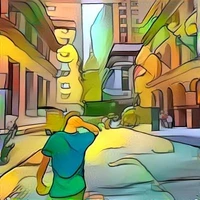
In this paper, we explore a new domain for video-to-video translation. Motivated by the availability of animation movies that are adopted from illustrated books for children, we aim to stylize these videos with the style of the original illustrations. Current state-of-the-art video-to-video translation models rely on having a video sequence or a single style image to stylize an input video. We introduce a new problem for video stylizing where an unordered set of images are used. This is a challenging task for two reasons: i) we do not have the advantage of temporal consistency as in video sequences; ii) it is more difficult to obtain consistent styles for video frames from a set of unordered images compared to using a single image. Most of the video-to-video translation methods are built on an image-to-image translation model, and integrate additional networks such as optical flow, or temporal predictors to capture temporal relations. These additional networks make the model training and inference complicated and slow down the process. To ensure temporal coherency in video-to-video style transfer, we propose a new generator network with feature warping layers which overcomes the limitations of the previous methods. We show the effectiveness of our method on three datasets both qualitatively and quantitatively. Code and pretrained models are available at https://github.com/giddyyupp/wait.

  • 6 authors
·
Oct 7, 2023

VideoControlNet: A Motion-Guided Video-to-Video Translation Framework by Using Diffusion Model with ControlNet

Recently, diffusion models like StableDiffusion have achieved impressive image generation results. However, the generation process of such diffusion models is uncontrollable, which makes it hard to generate videos with continuous and consistent content. In this work, by using the diffusion model with ControlNet, we proposed a new motion-guided video-to-video translation framework called VideoControlNet to generate various videos based on the given prompts and the condition from the input video. Inspired by the video codecs that use motion information for reducing temporal redundancy, our framework uses motion information to prevent the regeneration of the redundant areas for content consistency. Specifically, we generate the first frame (i.e., the I-frame) by using the diffusion model with ControlNet. Then we generate other key frames (i.e., the P-frame) based on the previous I/P-frame by using our newly proposed motion-guided P-frame generation (MgPG) method, in which the P-frames are generated based on the motion information and the occlusion areas are inpainted by using the diffusion model. Finally, the rest frames (i.e., the B-frame) are generated by using our motion-guided B-frame interpolation (MgBI) module. Our experiments demonstrate that our proposed VideoControlNet inherits the generation capability of the pre-trained large diffusion model and extends the image diffusion model to the video diffusion model by using motion information. More results are provided at our project page.

  • 2 authors
·
Jul 26, 2023

LatentWarp: Consistent Diffusion Latents for Zero-Shot Video-to-Video Translation

Leveraging the generative ability of image diffusion models offers great potential for zero-shot video-to-video translation. The key lies in how to maintain temporal consistency across generated video frames by image diffusion models. Previous methods typically adopt cross-frame attention, i.e., sharing the key and value tokens across attentions of different frames, to encourage the temporal consistency. However, in those works, temporal inconsistency issue may not be thoroughly solved, rendering the fidelity of generated videos limited.%The current state of the art cross-frame attention method aims at maintaining fine-grained visual details across frames, but it is still challenged by the temporal coherence problem. In this paper, we find the bottleneck lies in the unconstrained query tokens and propose a new zero-shot video-to-video translation framework, named LatentWarp. Our approach is simple: to constrain the query tokens to be temporally consistent, we further incorporate a warping operation in the latent space to constrain the query tokens. Specifically, based on the optical flow obtained from the original video, we warp the generated latent features of last frame to align with the current frame during the denoising process. As a result, the corresponding regions across the adjacent frames can share closely-related query tokens and attention outputs, which can further improve latent-level consistency to enhance visual temporal coherence of generated videos. Extensive experiment results demonstrate the superiority of LatentWarp in achieving video-to-video translation with temporal coherence.

  • 7 authors
·
Nov 1, 2023

ProxyPose: 6-DoF Pose Tracking via Video-to-Video Translation

Tracking the six-degree-of-freedom (6-DoF) pose of objects and surfaces from monocular video is a long-standing problem in computer vision. To tackle this problem, existing methods require inputs beyond the video itself-such as 3D models, depth maps, object masks, or task-specific learned features-and they struggle with textureless, transparent, reflective, or deformable surfaces. Here, we introduce ProxyPose, which recasts 6-DoF pose tracking as video-to-video translation. Given only a video and a single marked pixel in the first frame, a fine-tuned video diffusion model translates the input into a proxy video-a synthetic video depicting a colored polyhedron undergoing the same local rigid-body motion as the surface region at the marked pixel. Because the proxy's geometry and appearance are known by construction, recovering its full 6-DoF trajectory reduces to classical pose estimation with off-the-shelf solvers. This formulation leverages large-scale video pre-training to absorb the hardest aspects of pose tracking-handling challenging materials, occlusions, and deformations-into the translation step, while operating at the pixel level with no assumptions about object identity, boundaries, or global rigidity. ProxyPose achieves state-of-the-art 6-DoF pose tracking accuracy without the additional inputs required by competing methods and after fine-tuning the video model only on synthetic data. We further demonstrate that ProxyPose extends to face tracking, camera pose estimation, and challenging in-the-wild scenes that are beyond the reach of existing approaches. Project page: https://ruihangzhang97.github.io/proxypose/.

  • 5 authors
·
Jul 6

VideoWeaver: Multimodal Multi-View Video-to-Video Transfer for Embodied Agents

Recent progress in video-to-video (V2V) translation has enabled realistic resimulation of embodied AI demonstrations, a capability that allows pretrained robot policies to be transferable to new environments without additional data collection. However, prior works can only operate on a single view at a time, while embodied AI tasks are commonly captured from multiple synchronized cameras to support policy learning. Naively applying single-view models independently to each camera leads to inconsistent appearance across views, and standard transformer architectures do not scale to multi-view settings due to the quadratic cost of cross-view attention. We present VideoWeaver, the first multimodal multi-view V2V translation framework. VideoWeaver is initially trained as a single-view flow-based V2V model. To achieve an extension to the multi-view regime, we propose to ground all views in a shared 4D latent space derived from a feed-forward spatial foundation model, namely, Pi3. This encourages view-consistent appearance even under wide baselines and dynamic camera motion. To scale beyond a fixed number of cameras, we train views at distinct diffusion timesteps, enabling the model to learn both joint and conditional view distributions. This in turn allows autoregressive synthesis of new viewpoints conditioned on existing ones. Experiments show superior or similar performance to the state-of-the-art on the single-view translation benchmarks and, for the first time, physically and stylistically consistent multi-view translations, including challenging egocentric and heterogeneous-camera setups central to world randomization for robot learning.

  • 7 authors
·
Mar 25

PickStyle: Video-to-Video Style Transfer with Context-Style Adapters

We address the task of video style transfer with diffusion models, where the goal is to preserve the context of an input video while rendering it in a target style specified by a text prompt. A major challenge is the lack of paired video data for supervision. We propose PickStyle, a video-to-video style transfer framework that augments pretrained video diffusion backbones with style adapters and benefits from paired still image data with source-style correspondences for training. PickStyle inserts low-rank adapters into the self-attention layers of conditioning modules, enabling efficient specialization for motion-style transfer while maintaining strong alignment between video content and style. To bridge the gap between static image supervision and dynamic video, we construct synthetic training clips from paired images by applying shared augmentations that simulate camera motion, ensuring temporal priors are preserved. In addition, we introduce Context-Style Classifier-Free Guidance (CS-CFG), a novel factorization of classifier-free guidance into independent text (style) and video (context) directions. CS-CFG ensures that context is preserved in generated video while the style is effectively transferred. Experiments across benchmarks show that our approach achieves temporally coherent, style-faithful, and content-preserving video translations, outperforming existing baselines both qualitatively and quantitatively.

Pickford Pickford
·
Oct 8, 2025 3

Motion-I2V: Consistent and Controllable Image-to-Video Generation with Explicit Motion Modeling

We introduce Motion-I2V, a novel framework for consistent and controllable image-to-video generation (I2V). In contrast to previous methods that directly learn the complicated image-to-video mapping, Motion-I2V factorizes I2V into two stages with explicit motion modeling. For the first stage, we propose a diffusion-based motion field predictor, which focuses on deducing the trajectories of the reference image's pixels. For the second stage, we propose motion-augmented temporal attention to enhance the limited 1-D temporal attention in video latent diffusion models. This module can effectively propagate reference image's feature to synthesized frames with the guidance of predicted trajectories from the first stage. Compared with existing methods, Motion-I2V can generate more consistent videos even at the presence of large motion and viewpoint variation. By training a sparse trajectory ControlNet for the first stage, Motion-I2V can support users to precisely control motion trajectories and motion regions with sparse trajectory and region annotations. This offers more controllability of the I2V process than solely relying on textual instructions. Additionally, Motion-I2V's second stage naturally supports zero-shot video-to-video translation. Both qualitative and quantitative comparisons demonstrate the advantages of Motion-I2V over prior approaches in consistent and controllable image-to-video generation.

  • 12 authors
·
Jan 29, 2024 8

CoDeF: Content Deformation Fields for Temporally Consistent Video Processing

We present the content deformation field CoDeF as a new type of video representation, which consists of a canonical content field aggregating the static contents in the entire video and a temporal deformation field recording the transformations from the canonical image (i.e., rendered from the canonical content field) to each individual frame along the time axis.Given a target video, these two fields are jointly optimized to reconstruct it through a carefully tailored rendering pipeline.We advisedly introduce some regularizations into the optimization process, urging the canonical content field to inherit semantics (e.g., the object shape) from the video.With such a design, CoDeF naturally supports lifting image algorithms for video processing, in the sense that one can apply an image algorithm to the canonical image and effortlessly propagate the outcomes to the entire video with the aid of the temporal deformation field.We experimentally show that CoDeF is able to lift image-to-image translation to video-to-video translation and lift keypoint detection to keypoint tracking without any training.More importantly, thanks to our lifting strategy that deploys the algorithms on only one image, we achieve superior cross-frame consistency in processed videos compared to existing video-to-video translation approaches, and even manage to track non-rigid objects like water and smog.Project page can be found at https://qiuyu96.github.io/CoDeF/.

  • 9 authors
·
Aug 15, 2023 1

H2R-Grounder: A Paired-Data-Free Paradigm for Translating Human Interaction Videos into Physically Grounded Robot Videos

Robots that learn manipulation skills from everyday human videos could acquire broad capabilities without tedious robot data collection. We propose a video-to-video translation framework that converts ordinary human-object interaction videos into motion-consistent robot manipulation videos with realistic, physically grounded interactions. Our approach does not require any paired human-robot videos for training only a set of unpaired robot videos, making the system easy to scale. We introduce a transferable representation that bridges the embodiment gap: by inpainting the robot arm in training videos to obtain a clean background and overlaying a simple visual cue (a marker and arrow indicating the gripper's position and orientation), we can condition a generative model to insert the robot arm back into the scene. At test time, we apply the same process to human videos (inpainting the person and overlaying human pose cues) and generate high-quality robot videos that mimic the human's actions. We fine-tune a SOTA video diffusion model (Wan 2.2) in an in-context learning manner to ensure temporal coherence and leveraging of its rich prior knowledge. Empirical results demonstrate that our approach achieves significantly more realistic and grounded robot motions compared to baselines, pointing to a promising direction for scaling up robot learning from unlabeled human videos. Project page: https://showlab.github.io/H2R-Grounder/

  • 5 authors
·
Dec 10, 2025 2

Responsive Listening Head Generation: A Benchmark Dataset and Baseline

We present a new listening head generation benchmark, for synthesizing responsive feedbacks of a listener (e.g., nod, smile) during a face-to-face conversation. As the indispensable complement to talking heads generation, listening head generation has seldomly been studied in literature. Automatically synthesizing listening behavior that actively responds to a talking head, is critical to applications such as digital human, virtual agents and social robots. In this work, we propose a novel dataset "ViCo", highlighting the listening head generation during a face-to-face conversation. A total number of 92 identities (67 speakers and 76 listeners) are involved in ViCo, featuring 483 clips in a paired "speaking-listening" pattern, where listeners show three listening styles based on their attitudes: positive, neutral, negative. Different from traditional speech-to-gesture or talking-head generation, listening head generation takes as input both the audio and visual signals from the speaker, and gives non-verbal feedbacks (e.g., head motions, facial expressions) in a real-time manner. Our dataset supports a wide range of applications such as human-to-human interaction, video-to-video translation, cross-modal understanding and generation. To encourage further research, we also release a listening head generation baseline, conditioning on different listening attitudes. Code & ViCo dataset: https://project.mhzhou.com/vico.

  • 6 authors
·
Dec 27, 2021

Turning Video Models into Generalist Robot Policies

Video generative models have emerged as a promising robotics backbone, capable of generating videos that depict the completion of complex tasks across embodiments and environments. Recent work proposes robot foundation models that jointly predict future observations and actions by finetuning video models with action-labeled data. In this paper, we test the limits of an alternative approach: leave the video planner as-is while training an embodiment-specific inverse dynamics model (IDM). This decoupling offers several natural benefits: the video planner remains embodiment-agnostic, different video models can be interchanged easily without re-training the IDM, and the IDM can be independently trained with readily available self-play data. We present a closed-loop, video-to-action policy that combines an action-free video world model with a carefully-designed IDM based on the robot embodiment Jacobian. We demonstrate that our IDM design is both data-efficient and scalable to high-dimensional action spaces. Our policy, which we coin the Video-to-Embodied Robot Action Model (VERA), achieves strong performance across simulated and real-world benchmarks, including zero-shot Panda arm manipulation and 16-DoF Allegro-hand dexterous cube re-orientation. The same video planner can be used across multiple embodiments by pairing it with different embodiment-specific IDMs. Our results show that decoupled video planning plus faithful video-to-action translation is a viable alternative route towards zero-shot, cross-embodiment, and generalizable robot control. More results are available on our project website: https://vera.csail.mit.edu.

  • 7 authors
·
May 26

VT-LVLM-AR: A Video-Temporal Large Vision-Language Model Adapter for Fine-Grained Action Recognition in Long-Term Videos

Human action recognition in long-term videos, characterized by complex backgrounds and subtle action differences, poses significant challenges for traditional deep learning models due to computational overhead, difficulty in capturing long-range temporal dependencies, and limited semantic understanding. While Large Language Models (LLMs) and Large Vision-Language Models (LVLMs) have shown remarkable capabilities in multi-modal understanding and reasoning, their direct application to continuous video streams for fine-grained action recognition remains an open problem. This paper introduces VT-LVLM-AR (Video-Temporal Large Vision-Language Model Adapter for Action Recognition), a novel framework designed to bridge this gap. VT-LVLM-AR comprises a Video-to-Event Mapper (VTEM) that efficiently transforms raw video into compact, semantically rich, and temporally coherent "visual event sequences" through lightweight spatio-temporal feature extraction, adaptive temporal pooling, and conceptual quantization with an event coherence bias. These visual event sequences are then fed into an LVLM-based Action Reasoning module, specifically a frozen LLaVA-1.5 model, adapted using parameter-efficient Prompt Tuning (P-Tuning v2) for action classification. Comprehensive evaluations on the NTU RGB+D and NTU RGB+D 120 datasets demonstrate that VT-LVLM-AR consistently achieves state-of-the-art performance, surpassing existing methods (e.g., 94.1% accuracy on NTU RGB+D X-Sub). Ablation studies confirm the critical contributions of VTEM's components and the efficacy of Prompt Tuning, while human evaluations underscore the interpretability of our visual event representations. This work highlights the immense potential of leveraging LVLMs for robust and interpretable video action understanding through effective video-to-language translation and efficient model adaptation.

  • 3 authors
·
Aug 21, 2025

StyleMaster: Stylize Your Video with Artistic Generation and Translation

Style control has been popular in video generation models. Existing methods often generate videos far from the given style, cause content leakage, and struggle to transfer one video to the desired style. Our first observation is that the style extraction stage matters, whereas existing methods emphasize global style but ignore local textures. In order to bring texture features while preventing content leakage, we filter content-related patches while retaining style ones based on prompt-patch similarity; for global style extraction, we generate a paired style dataset through model illusion to facilitate contrastive learning, which greatly enhances the absolute style consistency. Moreover, to fill in the image-to-video gap, we train a lightweight motion adapter on still videos, which implicitly enhances stylization extent, and enables our image-trained model to be seamlessly applied to videos. Benefited from these efforts, our approach, StyleMaster, not only achieves significant improvement in both style resemblance and temporal coherence, but also can easily generalize to video style transfer with a gray tile ControlNet. Extensive experiments and visualizations demonstrate that StyleMaster significantly outperforms competitors, effectively generating high-quality stylized videos that align with textual content and closely resemble the style of reference images. Our project page is at https://zixuan-ye.github.io/stylemaster

  • 6 authors
·
Dec 10, 2024 3

Reuse and Diffuse: Iterative Denoising for Text-to-Video Generation

Inspired by the remarkable success of Latent Diffusion Models (LDMs) for image synthesis, we study LDM for text-to-video generation, which is a formidable challenge due to the computational and memory constraints during both model training and inference. A single LDM is usually only capable of generating a very limited number of video frames. Some existing works focus on separate prediction models for generating more video frames, which suffer from additional training cost and frame-level jittering, however. In this paper, we propose a framework called "Reuse and Diffuse" dubbed VidRD to produce more frames following the frames already generated by an LDM. Conditioned on an initial video clip with a small number of frames, additional frames are iteratively generated by reusing the original latent features and following the previous diffusion process. Besides, for the autoencoder used for translation between pixel space and latent space, we inject temporal layers into its decoder and fine-tune these layers for higher temporal consistency. We also propose a set of strategies for composing video-text data that involve diverse content from multiple existing datasets including video datasets for action recognition and image-text datasets. Extensive experiments show that our method achieves good results in both quantitative and qualitative evaluations. Our project page is available https://anonymous0x233.github.io/ReuseAndDiffuse/{here}.

  • 10 authors
·
Sep 7, 2023

Factorized-Dreamer: Training A High-Quality Video Generator with Limited and Low-Quality Data

Text-to-video (T2V) generation has gained significant attention due to its wide applications to video generation, editing, enhancement and translation, \etc. However, high-quality (HQ) video synthesis is extremely challenging because of the diverse and complex motions existed in real world. Most existing works struggle to address this problem by collecting large-scale HQ videos, which are inaccessible to the community. In this work, we show that publicly available limited and low-quality (LQ) data are sufficient to train a HQ video generator without recaptioning or finetuning. We factorize the whole T2V generation process into two steps: generating an image conditioned on a highly descriptive caption, and synthesizing the video conditioned on the generated image and a concise caption of motion details. Specifically, we present Factorized-Dreamer, a factorized spatiotemporal framework with several critical designs for T2V generation, including an adapter to combine text and image embeddings, a pixel-aware cross attention module to capture pixel-level image information, a T5 text encoder to better understand motion description, and a PredictNet to supervise optical flows. We further present a noise schedule, which plays a key role in ensuring the quality and stability of video generation. Our model lowers the requirements in detailed captions and HQ videos, and can be directly trained on limited LQ datasets with noisy and brief captions such as WebVid-10M, largely alleviating the cost to collect large-scale HQ video-text pairs. Extensive experiments in a variety of T2V and image-to-video generation tasks demonstrate the effectiveness of our proposed Factorized-Dreamer. Our source codes are available at https://github.com/yangxy/Factorized-Dreamer/.

  • 6 authors
·
Aug 19, 2024 3

Bridging Sign and Spoken Languages: Pseudo Gloss Generation for Sign Language Translation

Sign Language Translation (SLT) aims to map sign language videos to spoken language text. A common approach relies on gloss annotations as an intermediate representation, decomposing SLT into two sub-tasks: video-to-gloss recognition and gloss-to-text translation. While effective, this paradigm depends on expert-annotated gloss labels, which are costly and rarely available in existing datasets, limiting its scalability. To address this challenge, we propose a gloss-free pseudo gloss generation framework that eliminates the need for human-annotated glosses while preserving the structured intermediate representation. Specifically, we prompt a Large Language Model (LLM) with a few example text-gloss pairs using in-context learning to produce draft sign glosses from spoken language text. To enhance the correspondence between LLM-generated pseudo glosses and the sign sequences in video, we correct the ordering in the pseudo glosses for better alignment via a weakly supervised learning process. This reordering facilitates the incorporation of auxiliary alignment objectives, and allows for the use of efficient supervision via a Connectionist Temporal Classification (CTC) loss. We train our SLT mode, which consists of a vision encoder and a translator, through a three-stage pipeline, which progressively narrows the modality gap between sign language and spoken language. Despite its simplicity, our approach outperforms previous state-of-the-art gloss-free frameworks on two SLT benchmarks and achieves competitive results compared to gloss-based methods.

  • 3 authors
·
May 20, 2025

ZeroNLG: Aligning and Autoencoding Domains for Zero-Shot Multimodal and Multilingual Natural Language Generation

Natural Language Generation (NLG) accepts input data in the form of images, videos, or text and generates corresponding natural language text as output. Existing NLG methods mainly adopt a supervised approach and rely heavily on coupled data-to-text pairs. However, for many targeted scenarios and for non-English languages, sufficient quantities of labeled data are often not available. To relax the dependency on labeled data of downstream tasks, we propose an intuitive and effective zero-shot learning framework, ZeroNLG, which can deal with multiple NLG tasks, including image-to-text (image captioning), video-to-text (video captioning), and text-to-text (neural machine translation), across English, Chinese, German, and French within a unified framework. ZeroNLG does not require any labeled downstream pairs for training. During training, ZeroNLG (i) projects different domains (across modalities and languages) to corresponding coordinates in a shared common latent space; (ii) bridges different domains by aligning their corresponding coordinates in this space; and (iii) builds an unsupervised multilingual auto-encoder to learn to generate text by reconstructing the input text given its coordinate in shared latent space. Consequently, during inference, based on the data-to-text pipeline, ZeroNLG can generate target sentences across different languages given the coordinate of input data in the common space. Within this unified framework, given visual (imaging or video) data as input, ZeroNLG can perform zero-shot visual captioning; given textual sentences as input, ZeroNLG can perform zero-shot machine translation. We present the results of extensive experiments on twelve NLG tasks, showing that, without using any labeled downstream pairs for training, ZeroNLG generates high-quality and believable outputs and significantly outperforms existing zero-shot methods.

  • 6 authors
·
Mar 11, 2023

Generative AI for Video Translation: A Scalable Architecture for Multilingual Video Conferencing

The real-time deployment of cascaded generative AI pipelines for applications like video translation is constrained by significant system-level challenges. These include the cumulative latency of sequential model inference and the quadratic (O(N^2)) computational complexity that renders multi-user video conferencing applications unscalable. This paper proposes and evaluates a practical system-level framework designed to mitigate these critical bottlenecks. The proposed architecture incorporates a turn-taking mechanism to reduce computational complexity from quadratic to linear in multi-user scenarios, and a segmented processing protocol to manage inference latency for a perceptually real-time experience. We implement a proof-of-concept pipeline and conduct a rigorous performance analysis across a multi-tiered hardware setup, including commodity (NVIDIA RTX 4060), cloud (NVIDIA T4), and enterprise (NVIDIA A100) GPUs. Our objective evaluation demonstrates that the system achieves real-time throughput (τ< 1.0) on modern hardware. A subjective user study further validates the approach, showing that a predictable, initial processing delay is highly acceptable to users in exchange for a smooth, uninterrupted playback experience. The work presents a validated, end-to-end system design that offers a practical roadmap for deploying scalable, real-time generative AI applications in multilingual communication platforms.

  • 5 authors
·
Dec 15, 2025

Neural Global Shutter: Learn to Restore Video from a Rolling Shutter Camera with Global Reset Feature

Most computer vision systems assume distortion-free images as inputs. The widely used rolling-shutter (RS) image sensors, however, suffer from geometric distortion when the camera and object undergo motion during capture. Extensive researches have been conducted on correcting RS distortions. However, most of the existing work relies heavily on the prior assumptions of scenes or motions. Besides, the motion estimation steps are either oversimplified or computationally inefficient due to the heavy flow warping, limiting their applicability. In this paper, we investigate using rolling shutter with a global reset feature (RSGR) to restore clean global shutter (GS) videos. This feature enables us to turn the rectification problem into a deblur-like one, getting rid of inaccurate and costly explicit motion estimation. First, we build an optic system that captures paired RSGR/GS videos. Second, we develop a novel algorithm incorporating spatial and temporal designs to correct the spatial-varying RSGR distortion. Third, we demonstrate that existing image-to-image translation algorithms can recover clean GS videos from distorted RSGR inputs, yet our algorithm achieves the best performance with the specific designs. Our rendered results are not only visually appealing but also beneficial to downstream tasks. Compared to the state-of-the-art RS solution, our RSGR solution is superior in both effectiveness and efficiency. Considering it is easy to realize without changing the hardware, we believe our RSGR solution can potentially replace the RS solution in taking distortion-free videos with low noise and low budget.

  • 6 authors
·
Apr 2, 2022

Wavelet Phase Diffusion for Structurally and Semantically Consistent Sim-to-Real Translation

Simulation-to-reality translation must bridge the appearance gap between synthetic and real domains while preserving structural and semantic consistency. Conditioning-based methods achieve spatial alignment but introduce computationally expensive control modules. Paired-data methods achieve realism but rely on complex synthesis pipelines, often altering scene geometry and semantics. Training-free editing methods avoid both constraints but lack a learned appearance prior, limiting their perceptual quality. Recently proposed phase-preserving diffusion presents a promising alternative, but Fourier-domain formulations are constrained by global spectral coupling. This coupling induces spatial artifacts such as ringing and boundary leakage, thereby degrading structural and semantic consistency. We introduce Wavelet Phase Diffusion, which addresses this through two components. First, we operate in the Dual-Tree Complex Wavelet Packet Transform domain, whose localized wavelet packets enable spatially adaptive phase injection without global spectral interference. Second, Low-Frequency Randomization (LFR) replaces the low-frequency packet, decoupling the model from the synthetic illumination prior and enabling in-distribution real-world appearance. Both components train on unpaired open-domain data, and introduce negligible inference overhead. The spatial locality further enables instance-level translation, where individual objects or regions are translated to photorealistic appearance independently while the surrounding scene remains untranslated. On vKITTI to KITTI image translation, ours outperforms prior methods in realism and semantic consistency while maintaining competitive structural alignment. For CARLA video translation, ours approaches the realism of paired-data methods while reducing VLM planner ADE and FDE by 5.4% and 5.1%, respectively.

Learning Temporal Coherence via Self-Supervision for GAN-based Video Generation

Our work explores temporal self-supervision for GAN-based video generation tasks. While adversarial training successfully yields generative models for a variety of areas, temporal relationships in the generated data are much less explored. Natural temporal changes are crucial for sequential generation tasks, e.g. video super-resolution and unpaired video translation. For the former, state-of-the-art methods often favor simpler norm losses such as L^2 over adversarial training. However, their averaging nature easily leads to temporally smooth results with an undesirable lack of spatial detail. For unpaired video translation, existing approaches modify the generator networks to form spatio-temporal cycle consistencies. In contrast, we focus on improving learning objectives and propose a temporally self-supervised algorithm. For both tasks, we show that temporal adversarial learning is key to achieving temporally coherent solutions without sacrificing spatial detail. We also propose a novel Ping-Pong loss to improve the long-term temporal consistency. It effectively prevents recurrent networks from accumulating artifacts temporally without depressing detailed features. Additionally, we propose a first set of metrics to quantitatively evaluate the accuracy as well as the perceptual quality of the temporal evolution. A series of user studies confirm the rankings computed with these metrics. Code, data, models, and results are provided at https://github.com/thunil/TecoGAN. The project page https://ge.in.tum.de/publications/2019-tecogan-chu/ contains supplemental materials.

  • 5 authors
·
Nov 23, 2018

Improving Image-to-Image Translation via a Rectified Flow Reformulation

In this work, we propose Image-to-Image Rectified Flow Reformulation (I2I-RFR), a practical plug-in reformulation that recasts standard I2I regression networks as continuous-time transport models. While pixel-wise I2I regression is simple, stable, and easy to adapt across tasks, it often over-smooths ill-posed and multimodal targets, whereas generative alternatives often require additional components, task-specific tuning, and more complex training and inference pipelines. Our method augments the backbone input by channel-wise concatenation with a noise-corrupted version of the ground-truth target and optimizes a simple t-reweighted pixel loss. This objective admits a rectified-flow interpretation via an induced velocity field, enabling ODE-based progressive refinement at inference time while largely preserving the standard supervised training pipeline. In most cases, adopting I2I-RFR requires only expanding the input channels, and inference can be performed with a few explicit solver steps (e.g., 3 steps) without distillation. Extensive experiments across multiple image-to-image translation and video restoration tasks show that I2I-RFR generally improves performance across a wide range of tasks and backbones, with particularly clear gains in perceptual quality and detail preservation. Overall, I2I-RFR provides a lightweight way to incorporate continuous-time refinement into conventional I2I models without requiring a heavy generative pipeline.

  • 3 authors
·
Mar 20

REGEN: Real-Time Photorealism Enhancement in Games via a Dual-Stage Generative Network Framework

Photorealism is an important aspect of modern video games since it can shape the player experience and simultaneously impact the immersion, narrative engagement, and visual fidelity. Although recent hardware technological breakthroughs, along with state-of-the-art rendering technologies, have significantly improved the visual realism of video games, achieving true photorealism in dynamic environments at real-time frame rates still remains a major challenge due to the tradeoff between visual quality and performance. In this short paper, we present a novel approach for enhancing the photorealism of rendered game frames using generative adversarial networks. To this end, we propose Real-time photorealism Enhancement in Games via a dual-stage gEnerative Network framework (REGEN), which employs a robust unpaired image-to-image translation model to produce semantically consistent photorealistic frames that transform the problem into a simpler paired image-to-image translation task. This enables training with a lightweight method that can achieve real-time inference time without compromising visual quality. We demonstrate the effectiveness of our framework on Grand Theft Auto V, showing that the approach achieves visual results comparable to the ones produced by the robust unpaired Im2Im method while improving inference speed by 32.14 times. Our findings also indicate that the results outperform the photorealism-enhanced frames produced by directly training a lightweight unpaired Im2Im translation method to translate the video game frames towards the visual characteristics of real-world images. Code, pre-trained models, and demos for this work are available at: https://github.com/stefanos50/REGEN.

  • 2 authors
·
Aug 23, 2025 2

SWoMo: Neuro-Symbolic World Model for Cataract Surgery Simulation

Realistic surgical simulation plays a crucial role in training novice surgeons and in the development of autonomous agents. World models can scale such simulation environments to realistic and diverse procedures by predicting future patient states conditioned on current observations and surgical actions. However, current state-of-the-art approaches often fail to satisfy key criteria required for clinical applicability, including visual realism, physically grounded interactions, and the ability to simulate scenarios beyond the training distribution. Hence, we introduce SWoMo, a neuro-symbolic world model for cataract surgery simulation that decouples motion generation from visual realism. The symbolic component, consisting of a rule-based simulator and scene graph representations, models motion dynamics and tool-tissue interactions, while a diffusion model produces realistic visual appearance, including textures and tissue deformations. We propose an inverse pairing strategy that reconstructs real surgical videos in the simulator to obtain paired simulated and real videos, which are then used to train our video diffusion model for the reverse objective of sim-to-real translation. Our experiments show both qualitative and quantitative improvements over prior work. We demonstrate that our simulator further satisfies the key criteria, including generalisation to unseen interaction geometries, improvements in downstream phase detection, and unsupervised video style transfer. The code, data, and model weights are available at: https://ssharvienkumar.github.io/SWoMo/

  • 6 authors
·
May 14

iPerceive: Applying Common-Sense Reasoning to Multi-Modal Dense Video Captioning and Video Question Answering

Most prior art in visual understanding relies solely on analyzing the "what" (e.g., event recognition) and "where" (e.g., event localization), which in some cases, fails to describe correct contextual relationships between events or leads to incorrect underlying visual attention. Part of what defines us as human and fundamentally different from machines is our instinct to seek causality behind any association, say an event Y that happened as a direct result of event X. To this end, we propose iPerceive, a framework capable of understanding the "why" between events in a video by building a common-sense knowledge base using contextual cues to infer causal relationships between objects in the video. We demonstrate the effectiveness of our technique using the dense video captioning (DVC) and video question answering (VideoQA) tasks. Furthermore, while most prior work in DVC and VideoQA relies solely on visual information, other modalities such as audio and speech are vital for a human observer's perception of an environment. We formulate DVC and VideoQA tasks as machine translation problems that utilize multiple modalities. By evaluating the performance of iPerceive DVC and iPerceive VideoQA on the ActivityNet Captions and TVQA datasets respectively, we show that our approach furthers the state-of-the-art. Code and samples are available at: iperceive.amanchadha.com.

  • 3 authors
·
Nov 16, 2020

Video-Based Reward Modeling for Computer-Use Agents

Computer-using agents (CUAs) are becoming increasingly capable; however, it remains difficult to scale evaluation of whether a trajectory truly fulfills a user instruction. In this work, we study reward modeling from execution video: a sequence of keyframes from an agent trajectory that is independent of the agent's internal reasoning or actions. Although video-execution modeling is method-agnostic, it presents key challenges, including highly redundant layouts and subtle, localized cues that determine success. We introduce Execution Video Reward 53k (ExeVR-53k), a dataset of 53k high-quality video--task--reward triplets. We further propose adversarial instruction translation to synthesize negative samples with step-level annotations. To enable learning from long, high-resolution execution videos, we design spatiotemporal token pruning, which removes homogeneous regions and persistent tokens while preserving decisive UI changes. Building on these components, we fine-tune an Execution Video Reward Model (ExeVRM) that takes only a user instruction and a video-execution sequence to predict task success. Our ExeVRM 8B achieves 84.7% accuracy and 87.7% recall on video-execution assessment, outperforming strong proprietary models such as GPT-5.2 and Gemini-3 Pro across Ubuntu, macOS, Windows, and Android, while providing more precise temporal attribution. These results show that video-execution reward modeling can serve as a scalable, model-agnostic evaluator for CUAs.

Lumen: Consistent Video Relighting and Harmonious Background Replacement with Video Generative Models

Video relighting is a challenging yet valuable task, aiming to replace the background in videos while correspondingly adjusting the lighting in the foreground with harmonious blending. During translation, it is essential to preserve the original properties of the foreground, e.g., albedo, and propagate consistent relighting among temporal frames. In this paper, we propose Lumen, an end-to-end video relighting framework developed on large-scale video generative models, receiving flexible textual description for instructing the control of lighting and background. Considering the scarcity of high-qualified paired videos with the same foreground in various lighting conditions, we construct a large-scale dataset with a mixture of realistic and synthetic videos. For the synthetic domain, benefiting from the abundant 3D assets in the community, we leverage advanced 3D rendering engine to curate video pairs in diverse environments. For the realistic domain, we adapt a HDR-based lighting simulation to complement the lack of paired in-the-wild videos. Powered by the aforementioned dataset, we design a joint training curriculum to effectively unleash the strengths of each domain, i.e., the physical consistency in synthetic videos, and the generalized domain distribution in realistic videos. To implement this, we inject a domain-aware adapter into the model to decouple the learning of relighting and domain appearance distribution. We construct a comprehensive benchmark to evaluate Lumen together with existing methods, from the perspectives of foreground preservation and video consistency assessment. Experimental results demonstrate that Lumen effectively edit the input into cinematic relighted videos with consistent lighting and strict foreground preservation. Our project page: https://lumen-relight.github.io/

  • 9 authors
·
Aug 18, 2025 3

RayPE: Ray-Space Positional Encoding for 3D-Aware Video Generation

Modern video diffusion transformers position their tokens through RoPE on the (u,v,t) axes -- a description of the camera's sampling grid that says nothing about the 3D structure of the scene. We observe that the geometric relation between two camera rays is captured by the Plucker reciprocal product, which is bilinear in the two rays -- the same algebraic form as the dot product in Transformer attention. Building on this analogy, we propose RayPE, a positional-encoding extension that injects per-token 6D Plucker coordinates additively into the queries and keys of self-attention, with a query/key flip arrangement under which the symmetric identity configuration coincides exactly with the reciprocal product. The injection is additive, the resulting attention score decomposes into a content term, a geometry term, and two content and geometry cross-terms -- all of which our experiments find individually necessary. To make the encoding stable across video data with heterogeneous camera-translation scales (SfM, deep SLAM, metric), we further decouple ray direction from moment magnitude, gate the encoding by a learned function of the log-magnitude, and apply RMSNorm to align it with the QKNorm-normalized content branch. The full module adds less than 0.1% parameters to a pretrained video DiT, is zero-initialized to start from the pretrained weights, and improves camera controllability, cross-frame 3D consistency, and overall video quality on a four-dataset training mixture.

  • 6 authors
·
Jun 25

AutoArabic: A Three-Stage Framework for Localizing Video-Text Retrieval Benchmarks

Video-to-text and text-to-video retrieval are dominated by English benchmarks (e.g. DiDeMo, MSR-VTT) and recent multilingual corpora (e.g. RUDDER), yet Arabic remains underserved, lacking localized evaluation metrics. We introduce a three-stage framework, AutoArabic, utilizing state-of-the-art large language models (LLMs) to translate non-Arabic benchmarks into Modern Standard Arabic, reducing the manual revision required by nearly fourfold. The framework incorporates an error detection module that automatically flags potential translation errors with 97% accuracy. Applying the framework to DiDeMo, a video retrieval benchmark produces DiDeMo-AR, an Arabic variant with 40,144 fluent Arabic descriptions. An analysis of the translation errors is provided and organized into an insightful taxonomy to guide future Arabic localization efforts. We train a CLIP-style baseline with identical hyperparameters on the Arabic and English variants of the benchmark, finding a moderate performance gap (about 3 percentage points at Recall@1), indicating that Arabic localization preserves benchmark difficulty. We evaluate three post-editing budgets (zero/ flagged-only/ full) and find that performance improves monotonically with more post-editing, while the raw LLM output (zero-budget) remains usable. To ensure reproducibility to other languages, we made the code available at https://github.com/Tahaalshatiri/AutoArabic.

  • 7 authors
·
Sep 19, 2025

Rethinking Amodal Video Segmentation from Learning Supervised Signals with Object-centric Representation

Video amodal segmentation is a particularly challenging task in computer vision, which requires to deduce the full shape of an object from the visible parts of it. Recently, some studies have achieved promising performance by using motion flow to integrate information across frames under a self-supervised setting. However, motion flow has a clear limitation by the two factors of moving cameras and object deformation. This paper presents a rethinking to previous works. We particularly leverage the supervised signals with object-centric representation in real-world scenarios. The underlying idea is the supervision signal of the specific object and the features from different views can mutually benefit the deduction of the full mask in any specific frame. We thus propose an Efficient object-centric Representation amodal Segmentation (EoRaS). Specially, beyond solely relying on supervision signals, we design a translation module to project image features into the Bird's-Eye View (BEV), which introduces 3D information to improve current feature quality. Furthermore, we propose a multi-view fusion layer based temporal module which is equipped with a set of object slots and interacts with features from different views by attention mechanism to fulfill sufficient object representation completion. As a result, the full mask of the object can be decoded from image features updated by object slots. Extensive experiments on both real-world and synthetic benchmarks demonstrate the superiority of our proposed method, achieving state-of-the-art performance. Our code will be released at https://github.com/kfan21/EoRaS.


  • 8 authors
·
Sep 23, 2023

Asynchronous Pipeline Parallelism for Real-Time Multilingual Lip Synchronization in Video Communication Systems

This paper introduces a parallel and asynchronous Transformer framework designed for efficient and accurate multilingual lip synchronization in real-time video conferencing systems. The proposed architecture integrates translation, speech processing, and lip-synchronization modules within a pipeline-parallel design that enables concurrent module execution through message-queue-based decoupling, reducing end-to-end latency by up to 3.1 times compared to sequential approaches. To enhance computational efficiency and throughput, the inference workflow of each module is optimized through low-level graph compilation, mixed-precision quantization, and hardware-accelerated kernel fusion. These optimizations provide substantial gains in efficiency while preserving model accuracy and visual quality. In addition, a context-adaptive silence-detection component segments the input speech stream at semantically coherent boundaries, improving translation consistency and temporal alignment across languages. Experimental results demonstrate that the proposed parallel architecture outperforms conventional sequential pipelines in processing speed, synchronization stability, and resource utilization. The modular, message-oriented design makes this work applicable to resource-constrained IoT communication scenarios including telemedicine, multilingual kiosks, and remote assistance systems. Overall, this work advances the development of low-latency, resource-efficient multimodal communication frameworks for next-generation AIoT systems.

  • 5 authors
·
Dec 20, 2025

Advanced Sign Language Video Generation with Compressed and Quantized Multi-Condition Tokenization

Sign Language Video Generation (SLVG) seeks to generate identity-preserving sign language videos from spoken language texts. Existing methods primarily rely on the single coarse condition (\eg, skeleton sequences) as the intermediary to bridge the translation model and the video generation model, which limits both the naturalness and expressiveness of the generated videos. To overcome these limitations, we propose SignViP, a novel SLVG framework that incorporates multiple fine-grained conditions for improved generation fidelity. Rather than directly translating error-prone high-dimensional conditions, SignViP adopts a discrete tokenization paradigm to integrate and represent fine-grained conditions (\ie, fine-grained poses and 3D hands). SignViP contains three core components. (1) Sign Video Diffusion Model is jointly trained with a multi-condition encoder to learn continuous embeddings that encapsulate fine-grained motion and appearance. (2) Finite Scalar Quantization (FSQ) Autoencoder is further trained to compress and quantize these embeddings into discrete tokens for compact representation of the conditions. (3) Multi-Condition Token Translator is trained to translate spoken language text to discrete multi-condition tokens. During inference, Multi-Condition Token Translator first translates the spoken language text into discrete multi-condition tokens. These tokens are then decoded to continuous embeddings by FSQ Autoencoder, which are subsequently injected into Sign Video Diffusion Model to guide video generation. Experimental results show that SignViP achieves state-of-the-art performance across metrics, including video quality, temporal coherence, and semantic fidelity. The code is available at https://github.com/umnooob/signvip/.

  • 9 authors
·
Jun 18, 2025

Track2View: 4D-Consistent Camera-Controlled Video Generation via Paired 3D Point Tracks

Re-rendering an existing video from a novel camera viewpoint requires the output to follow the prescribed camera trajectory while preserving the appearance and dynamics of the original scene across every frame. Existing methods rely on per-frame pose embeddings, noisy point-cloud renderings, or implicit learned correspondences, none of which provides an explicit, temporally continuous link between source and target pixels. We propose Track2View, which conditions a video diffusion transformer on paired 3D point tracks: sparse trajectories of scene points projected into both the source and target camera views. These tracks provide explicit spatiotemporal correspondences that are temporally continuous by construction, encoding what content should appear where and when. At the core of Track2View is a dual-view track conditioner that transfers visual context from source to target view through parameter-free geometric operations and learned temporal aggregation, ensuring generalization to arbitrary camera trajectories without memorizing specific motions. We further introduce a data curation pipeline that extracts one-to-one track correspondences by running a 3D point tracker on temporally concatenated multi-camera view pairs. On a 400-video benchmark spanning static and dynamic scenes, Track2View achieves state-of-the-art results across visual quality, view synchronization, and camera accuracy, reducing rotation error by 30-65% and translation error by 61-72% relative to leading baselines. Project page is available at this https URL: https://qjizhi.github.io/track2view

Is context all you need? Scaling Neural Sign Language Translation to Large Domains of Discourse

Sign Language Translation (SLT) is a challenging task that aims to generate spoken language sentences from sign language videos, both of which have different grammar and word/gloss order. From a Neural Machine Translation (NMT) perspective, the straightforward way of training translation models is to use sign language phrase-spoken language sentence pairs. However, human interpreters heavily rely on the context to understand the conveyed information, especially for sign language interpretation, where the vocabulary size may be significantly smaller than their spoken language equivalent. Taking direct inspiration from how humans translate, we propose a novel multi-modal transformer architecture that tackles the translation task in a context-aware manner, as a human would. We use the context from previous sequences and confident predictions to disambiguate weaker visual cues. To achieve this we use complementary transformer encoders, namely: (1) A Video Encoder, that captures the low-level video features at the frame-level, (2) A Spotting Encoder, that models the recognized sign glosses in the video, and (3) A Context Encoder, which captures the context of the preceding sign sequences. We combine the information coming from these encoders in a final transformer decoder to generate spoken language translations. We evaluate our approach on the recently published large-scale BOBSL dataset, which contains ~1.2M sequences, and on the SRF dataset, which was part of the WMT-SLT 2022 challenge. We report significant improvements on state-of-the-art translation performance using contextual information, nearly doubling the reported BLEU-4 scores of baseline approaches.

  • 3 authors
·
Aug 18, 2023

RobotArena $\infty$: Scalable Robot Benchmarking via Real-to-Sim Translation

The pursuit of robot generalists - instructable agents capable of performing diverse tasks across diverse environments - demands rigorous and scalable evaluation. Yet real-world testing of robot policies remains fundamentally constrained: it is labor-intensive, slow, unsafe at scale, and difficult to reproduce. Existing simulation benchmarks are similarly limited, as they train and test policies within the same synthetic domains and cannot assess models trained from real-world demonstrations or alternative simulation environments. As policies expand in scope and complexity, these barriers only intensify, since defining "success" in robotics often hinges on nuanced human judgments of execution quality. In this paper, we introduce a new benchmarking framework that overcomes these challenges by shifting VLA evaluation into large-scale simulated environments augmented with online human feedback. Leveraging advances in vision-language models, 2D-to-3D generative modeling, and differentiable rendering, our approach automatically converts video demonstrations from widely used robot datasets into simulated counterparts. Within these digital twins, we assess VLA policies using both automated VLM-guided scoring and scalable human preference judgments collected from crowdworkers, transforming human involvement from tedious scene setup, resetting, and safety supervision into lightweight preference comparisons. To measure robustness, we systematically perturb simulated environments along multiple axes, such as textures and object placements, stress-testing policy generalization under controlled variation. The result is a continuously evolving, reproducible, and scalable benchmark for real-world trained robot manipulation policies, addressing a critical missing capability in today's robotics landscape.

  • 9 authors
·
Oct 27, 2025 1

StyleAvatar: Real-time Photo-realistic Portrait Avatar from a Single Video

Face reenactment methods attempt to restore and re-animate portrait videos as realistically as possible. Existing methods face a dilemma in quality versus controllability: 2D GAN-based methods achieve higher image quality but suffer in fine-grained control of facial attributes compared with 3D counterparts. In this work, we propose StyleAvatar, a real-time photo-realistic portrait avatar reconstruction method using StyleGAN-based networks, which can generate high-fidelity portrait avatars with faithful expression control. We expand the capabilities of StyleGAN by introducing a compositional representation and a sliding window augmentation method, which enable faster convergence and improve translation generalization. Specifically, we divide the portrait scenes into three parts for adaptive adjustments: facial region, non-facial foreground region, and the background. Besides, our network leverages the best of UNet, StyleGAN and time coding for video learning, which enables high-quality video generation. Furthermore, a sliding window augmentation method together with a pre-training strategy are proposed to improve translation generalization and training performance, respectively. The proposed network can converge within two hours while ensuring high image quality and a forward rendering time of only 20 milliseconds. Furthermore, we propose a real-time live system, which further pushes research into applications. Results and experiments demonstrate the superiority of our method in terms of image quality, full portrait video generation, and real-time re-animation compared to existing facial reenactment methods. Training and inference code for this paper are at https://github.com/LizhenWangT/StyleAvatar.

  • 7 authors
·
May 1, 2023

InstaDrag: Lightning Fast and Accurate Drag-based Image Editing Emerging from Videos

Accuracy and speed are critical in image editing tasks. Pan et al. introduced a drag-based image editing framework that achieves pixel-level control using Generative Adversarial Networks (GANs). A flurry of subsequent studies enhanced this framework's generality by leveraging large-scale diffusion models. However, these methods often suffer from inordinately long processing times (exceeding 1 minute per edit) and low success rates. Addressing these issues head on, we present InstaDrag, a rapid approach enabling high quality drag-based image editing in ~1 second. Unlike most previous methods, we redefine drag-based editing as a conditional generation task, eliminating the need for time-consuming latent optimization or gradient-based guidance during inference. In addition, the design of our pipeline allows us to train our model on large-scale paired video frames, which contain rich motion information such as object translations, changing poses and orientations, zooming in and out, etc. By learning from videos, our approach can significantly outperform previous methods in terms of accuracy and consistency. Despite being trained solely on videos, our model generalizes well to perform local shape deformations not presented in the training data (e.g., lengthening of hair, twisting rainbows, etc.). Extensive qualitative and quantitative evaluations on benchmark datasets corroborate the superiority of our approach. The code and model will be released at https://github.com/magic-research/InstaDrag.

  • 5 authors
·
May 22, 2024

T2Vid: Translating Long Text into Multi-Image is the Catalyst for Video-LLMs

The success of Multimodal Large Language Models (MLLMs) in the image domain has garnered wide attention from the research community. Drawing on previous successful experiences, researchers have recently explored extending the success to the video understanding realms. Apart from training from scratch, an efficient way is to utilize the pre-trained image-LLMs, leading to two mainstream approaches, i.e. zero-shot inference and further fine-tuning with video data. In this work, our study of these approaches harvests an effective data augmentation method. We first make a deeper inspection of the zero-shot inference way and identify two limitations, i.e. limited generalization and lack of temporal understanding capabilities. Thus, we further investigate the fine-tuning approach and find a low learning efficiency when simply using all the video data samples, which can be attributed to a lack of instruction diversity. Aiming at this issue, we develop a method called T2Vid to synthesize video-like samples to enrich the instruction diversity in the training corpus. Integrating these data enables a simple and efficient training scheme, which achieves performance comparable to or even superior to using full video datasets by training with just 15% the sample size. Meanwhile, we find that the proposed scheme can boost the performance of long video understanding without training with long video samples. We hope our study will spark more thinking about using MLLMs for video understanding and curation of high-quality data. The code is released at https://github.com/xjtupanda/T2Vid.

  • 13 authors
·
Nov 29, 2024

EmbodieDreamer: Advancing Real2Sim2Real Transfer for Policy Training via Embodied World Modeling

The rapid advancement of Embodied AI has led to an increasing demand for large-scale, high-quality real-world data. However, collecting such embodied data remains costly and inefficient. As a result, simulation environments have become a crucial surrogate for training robot policies. Yet, the significant Real2Sim2Real gap remains a critical bottleneck, particularly in terms of physical dynamics and visual appearance. To address this challenge, we propose EmbodieDreamer, a novel framework that reduces the Real2Sim2Real gap from both the physics and appearance perspectives. Specifically, we propose PhysAligner, a differentiable physics module designed to reduce the Real2Sim physical gap. It jointly optimizes robot-specific parameters such as control gains and friction coefficients to better align simulated dynamics with real-world observations. In addition, we introduce VisAligner, which incorporates a conditional video diffusion model to bridge the Sim2Real appearance gap by translating low-fidelity simulated renderings into photorealistic videos conditioned on simulation states, enabling high-fidelity visual transfer. Extensive experiments validate the effectiveness of EmbodieDreamer. The proposed PhysAligner reduces physical parameter estimation error by 3.74% compared to simulated annealing methods while improving optimization speed by 89.91\%. Moreover, training robot policies in the generated photorealistic environment leads to a 29.17% improvement in the average task success rate across real-world tasks after reinforcement learning. Code, model and data will be publicly available.

  • 10 authors
·
Jul 6, 2025

MSVD-Indonesian: A Benchmark for Multimodal Video-Text Tasks in Indonesian

Multimodal learning on video and text data has been receiving growing attention from many researchers in various research tasks, including text-to-video retrieval, video-to-text retrieval, and video captioning. Although many algorithms have been proposed for those challenging tasks, most of them are developed on English language datasets. Despite Indonesian being one of the most spoken languages in the world, the research progress on the multimodal video-text with Indonesian sentences is still under-explored, likely due to the absence of the public benchmark dataset. To address this issue, we construct the first public Indonesian video-text dataset by translating English sentences from the MSVD dataset to Indonesian sentences. Using our dataset, we then train neural network models which were developed for the English video-text dataset on three tasks, i.e., text-to-video retrieval, video-to-text retrieval, and video captioning. The recent neural network-based approaches to video-text tasks often utilized a feature extractor that is primarily pretrained on an English vision-language dataset. Since the availability of the pretraining resources with Indonesian sentences is relatively limited, the applicability of those approaches to our dataset is still questionable. To overcome the lack of pretraining resources, we apply cross-lingual transfer learning by utilizing the feature extractors pretrained on the English dataset, and we then fine-tune the models on our Indonesian dataset. Our experimental results show that this approach can help to improve the performance for the three tasks on all metrics. Finally, we discuss potential future works using our dataset, inspiring further research in the Indonesian multimodal video-text tasks. We believe that our dataset and our experimental results could provide valuable contributions to the community. Our dataset is available on GitHub.

  • 1 authors
·
Jun 20, 2023

DiCoDe: Diffusion-Compressed Deep Tokens for Autoregressive Video Generation with Language Models

Videos are inherently temporal sequences by their very nature. In this work, we explore the potential of modeling videos in a chronological and scalable manner with autoregressive (AR) language models, inspired by their success in natural language processing. We introduce DiCoDe, a novel approach that leverages Diffusion-Compressed Deep Tokens to generate videos with a language model in an autoregressive manner. Unlike existing methods that employ low-level representations with limited compression rates, DiCoDe utilizes deep tokens with a considerable compression rate (a 1000x reduction in token count). This significant compression is made possible by a tokenizer trained through leveraging the prior knowledge of video diffusion models. Deep tokens enable DiCoDe to employ vanilla AR language models for video generation, akin to translating one visual "language" into another. By treating videos as temporal sequences, DiCoDe fully harnesses the capabilities of language models for autoregressive generation. DiCoDe is scalable using readily available AR architectures, and is capable of generating videos ranging from a few seconds to one minute using only 4 A100 GPUs for training. We evaluate DiCoDe both quantitatively and qualitatively, demonstrating that it performs comparably to existing methods in terms of quality while ensuring efficient training. To showcase its scalability, we release a series of DiCoDe configurations with varying parameter sizes and observe a consistent improvement in performance as the model size increases from 100M to 3B. We believe that DiCoDe's exploration in academia represents a promising initial step toward scalable video modeling with AR language models, paving the way for the development of larger and more powerful video generation models.

  • 5 authors
·
Dec 5, 2024

Towards Understanding Camera Motions in Any Video

We introduce CameraBench, a large-scale dataset and benchmark designed to assess and improve camera motion understanding. CameraBench consists of ~3,000 diverse internet videos, annotated by experts through a rigorous multi-stage quality control process. One of our contributions is a taxonomy of camera motion primitives, designed in collaboration with cinematographers. We find, for example, that some motions like "follow" (or tracking) require understanding scene content like moving subjects. We conduct a large-scale human study to quantify human annotation performance, revealing that domain expertise and tutorial-based training can significantly enhance accuracy. For example, a novice may confuse zoom-in (a change of intrinsics) with translating forward (a change of extrinsics), but can be trained to differentiate the two. Using CameraBench, we evaluate Structure-from-Motion (SfM) and Video-Language Models (VLMs), finding that SfM models struggle to capture semantic primitives that depend on scene content, while VLMs struggle to capture geometric primitives that require precise estimation of trajectories. We then fine-tune a generative VLM on CameraBench to achieve the best of both worlds and showcase its applications, including motion-augmented captioning, video question answering, and video-text retrieval. We hope our taxonomy, benchmark, and tutorials will drive future efforts towards the ultimate goal of understanding camera motions in any video.

  • 15 authors
·
Apr 21, 2025 3

OmnixR: Evaluating Omni-modality Language Models on Reasoning across Modalities

We introduce OmnixR, an evaluation suite designed to benchmark SoTA Omni-modality Language Models, such as GPT-4o and Gemini. Evaluating OLMs, which integrate multiple modalities such as text, vision, and audio, presents unique challenges. Particularly, the user message might often consist of multiple modalities, such that OLMs have to establish holistic understanding and reasoning across modalities to accomplish the task. Existing benchmarks are limited to single modality or dual-modality tasks, overlooking comprehensive multi-modal assessments of model reasoning. To address this, OmnixR offers two evaluation variants: (1)synthetic subset: a synthetic dataset generated automatically by translating text into multiple modalities--audio, images, video, and hybrids (Omnify). (2)realistic subset: a real-world dataset, manually curated and annotated by experts, for evaluating cross-modal reasoning in natural settings. OmnixR presents a unique evaluation towards assessing OLMs over a diverse mix of modalities, such as a question that involves video, audio, and text, providing a rigorous cross-modal reasoning testbed unlike any existing benchmarks. Our experiments find that all state-of-the-art OLMs struggle with OmnixR questions that require integrating information from multiple modalities to answer. Further analysis highlights differences in reasoning behavior, underscoring the challenges of omni-modal AI alignment.

  • 11 authors
·
Oct 16, 2024

Diffusion Knows Transparency: Repurposing Video Diffusion for Transparent Object Depth and Normal Estimation

Transparent objects remain notoriously hard for perception systems: refraction, reflection and transmission break the assumptions behind stereo, ToF and purely discriminative monocular depth, causing holes and temporally unstable estimates. Our key observation is that modern video diffusion models already synthesize convincing transparent phenomena, suggesting they have internalized the optical rules. We build TransPhy3D, a synthetic video corpus of transparent/reflective scenes: 11k sequences rendered with Blender/Cycles. Scenes are assembled from a curated bank of category-rich static assets and shape-rich procedural assets paired with glass/plastic/metal materials. We render RGB + depth + normals with physically based ray tracing and OptiX denoising. Starting from a large video diffusion model, we learn a video-to-video translator for depth (and normals) via lightweight LoRA adapters. During training we concatenate RGB and (noisy) depth latents in the DiT backbone and co-train on TransPhy3D and existing frame-wise synthetic datasets, yielding temporally consistent predictions for arbitrary-length input videos. The resulting model, DKT, achieves zero-shot SOTA on real and synthetic video benchmarks involving transparency: ClearPose, DREDS (CatKnown/CatNovel), and TransPhy3D-Test. It improves accuracy and temporal consistency over strong image/video baselines, and a normal variant sets the best video normal estimation results on ClearPose. A compact 1.3B version runs at ~0.17 s/frame. Integrated into a grasping stack, DKT's depth boosts success rates across translucent, reflective and diffuse surfaces, outperforming prior estimators. Together, these results support a broader claim: "Diffusion knows transparency." Generative video priors can be repurposed, efficiently and label-free, into robust, temporally coherent perception for challenging real-world manipulation.

OmniVR: Joint Video-Audio Conditional Generation for Restoring Degraded Historical Films

Historical films suffer from co-occurring visual and audio degradations---blur, noise, flicker, hiss, clipping, and dropout---yet existing methods restore each modality independently, leaving quality gaps and cross-modal inconsistency. We present OmniVR, the first joint audio-video generative restoration model. Built upon a 22B-parameter audio-video generation backbone, OmniVR formulates restoration as conditional generation within a unified multimodal DiT: the low-quality video and audio are encoded as latent conditions, combined with a fixed restoration prompt, and jointly denoised to recover visual structure, temporal motion, and acoustic detail under one coordinated objective. Three key designs enable this adaptation: (1) a joint audio-video degradation pipeline that simulates real old-film characteristics from Internet-collected data; (2) an architecture-preserving text-to-audio-video (T2AV) to audio-video-to-audio-video (AV2AV) transition with prompt annealing that maximally retains the generative prior; and (3) first-frame image-to-video (I2V) anchoring with loss reweighting and waveform supervision for long-video extrapolation and audio fidelity. We also propose OmniVRBench, the first benchmark that evaluates audio-video restoration across visual quality, audio quality, temporal consistency, and audio-visual synchrony on 200 real historical clips. OmniVR surpasses all prior methods on all six visual metrics, achieves the best audio quality, and produces natural colorization---the first method to jointly address all three aspects. Code and weights will be publicly released. Project Page: https://xin1u.github.io/OminiVR_PAGE/

  • 6 authors
·
Aug 3

DiTaiListener: Controllable High Fidelity Listener Video Generation with Diffusion

Generating naturalistic and nuanced listener motions for extended interactions remains an open problem. Existing methods often rely on low-dimensional motion codes for facial behavior generation followed by photorealistic rendering, limiting both visual fidelity and expressive richness. To address these challenges, we introduce DiTaiListener, powered by a video diffusion model with multimodal conditions. Our approach first generates short segments of listener responses conditioned on the speaker's speech and facial motions with DiTaiListener-Gen. It then refines the transitional frames via DiTaiListener-Edit for a seamless transition. Specifically, DiTaiListener-Gen adapts a Diffusion Transformer (DiT) for the task of listener head portrait generation by introducing a Causal Temporal Multimodal Adapter (CTM-Adapter) to process speakers' auditory and visual cues. CTM-Adapter integrates speakers' input in a causal manner into the video generation process to ensure temporally coherent listener responses. For long-form video generation, we introduce DiTaiListener-Edit, a transition refinement video-to-video diffusion model. The model fuses video segments into smooth and continuous videos, ensuring temporal consistency in facial expressions and image quality when merging short video segments produced by DiTaiListener-Gen. Quantitatively, DiTaiListener achieves the state-of-the-art performance on benchmark datasets in both photorealism (+73.8% in FID on RealTalk) and motion representation (+6.1% in FD metric on VICO) spaces. User studies confirm the superior performance of DiTaiListener, with the model being the clear preference in terms of feedback, diversity, and smoothness, outperforming competitors by a significant margin.

  • 6 authors
·
Apr 4, 2025 4

SEINE: Short-to-Long Video Diffusion Model for Generative Transition and Prediction

Recently video generation has achieved substantial progress with realistic results. Nevertheless, existing AI-generated videos are usually very short clips ("shot-level") depicting a single scene. To deliver a coherent long video ("story-level"), it is desirable to have creative transition and prediction effects across different clips. This paper presents a short-to-long video diffusion model, SEINE, that focuses on generative transition and prediction. The goal is to generate high-quality long videos with smooth and creative transitions between scenes and varying lengths of shot-level videos. Specifically, we propose a random-mask video diffusion model to automatically generate transitions based on textual descriptions. By providing the images of different scenes as inputs, combined with text-based control, our model generates transition videos that ensure coherence and visual quality. Furthermore, the model can be readily extended to various tasks such as image-to-video animation and autoregressive video prediction. To conduct a comprehensive evaluation of this new generative task, we propose three assessing criteria for smooth and creative transition: temporal consistency, semantic similarity, and video-text semantic alignment. Extensive experiments validate the effectiveness of our approach over existing methods for generative transition and prediction, enabling the creation of story-level long videos. Project page: https://vchitect.github.io/SEINE-project/ .

  • 10 authors
·
Oct 31, 2023 1

ShotAdapter: Text-to-Multi-Shot Video Generation with Diffusion Models

Current diffusion-based text-to-video methods are limited to producing short video clips of a single shot and lack the capability to generate multi-shot videos with discrete transitions where the same character performs distinct activities across the same or different backgrounds. To address this limitation we propose a framework that includes a dataset collection pipeline and architectural extensions to video diffusion models to enable text-to-multi-shot video generation. Our approach enables generation of multi-shot videos as a single video with full attention across all frames of all shots, ensuring character and background consistency, and allows users to control the number, duration, and content of shots through shot-specific conditioning. This is achieved by incorporating a transition token into the text-to-video model to control at which frames a new shot begins and a local attention masking strategy which controls the transition token's effect and allows shot-specific prompting. To obtain training data we propose a novel data collection pipeline to construct a multi-shot video dataset from existing single-shot video datasets. Extensive experiments demonstrate that fine-tuning a pre-trained text-to-video model for a few thousand iterations is enough for the model to subsequently be able to generate multi-shot videos with shot-specific control, outperforming the baselines. You can find more details in https://shotadapter.github.io/

  • 6 authors
·
May 12, 2025

From Human Videos to Robot Manipulation: A Survey on Scalable Vision-Language-Action Learning with Human-Centric Data

Recent progress in generalizable embodied control has been driven by large-scale pretraining of Vision-Language-Action (VLA) models. However, most existing approaches rely on large collections of robot demonstrations, which are costly to obtain and tightly coupled to specific embodiments. Human videos, by contrast, are abundant and capture rich interactions, providing diverse semantic and physical cues for real-world manipulation. Yet, embodiment differences and the frequent absence of task-aligned annotations make their direct use in VLA models challenging. This survey provides a unified view of how human videos are transformed into effective knowledge for VLA models. We categorize existing approaches into four classes based on the action-related information they derive: (i) latent action representations that encode inter-frame changes; (ii) predictive world models that forecast future frames; (iii) explicit 2D supervision that extracts image-plane cues; and (iv) explicit 3D reconstruction that recovers geometry or motion. Beyond this taxonomy, we highlight three key open challenges in this area: structuring unstructured videos into training-ready episodes, grounding video-derived supervision into robot-executable actions under embodiment and viewpoint heterogeneity, and designing evaluation protocols that better predict real-world deployment performance and transfer efficiency, thereby informing future research directions. A curated list of papers and resources is available at https://github.com/AaronFengZY/HumanCentricToVLA-Survey.

  • 15 authors
·
May 17

MultiSoundGen: Video-to-Audio Generation for Multi-Event Scenarios via SlowFast Contrastive Audio-Visual Pretraining and Direct Preference Optimization

Current video-to-audio (V2A) methods struggle in complex multi-event scenarios (video scenarios involving multiple sound sources, sound events, or transitions) due to two critical limitations. First, existing methods face challenges in precisely aligning intricate semantic information together with rapid dynamic features. Second, foundational training lacks quantitative preference optimization for semantic-temporal alignment and audio quality. As a result, it fails to enhance integrated generation quality in cluttered multi-event scenes. To address these core limitations, this study proposes a novel V2A framework: MultiSoundGen. It introduces direct preference optimization (DPO) into the V2A domain, leveraging audio-visual pretraining (AVP) to enhance performance in complex multi-event scenarios. Our contributions include two key innovations: the first is SlowFast Contrastive AVP (SF-CAVP), a pioneering AVP model with a unified dual-stream architecture. SF-CAVP explicitly aligns core semantic representations and rapid dynamic features of audio-visual data to handle multi-event complexity; second, we integrate the DPO method into V2A task and propose AVP-Ranked Preference Optimization (AVP-RPO). It uses SF-CAVP as a reward model to quantify and prioritize critical semantic-temporal matches while enhancing audio quality. Experiments demonstrate that MultiSoundGen achieves state-of-the-art (SOTA) performance in multi-event scenarios, delivering comprehensive gains across distribution matching, audio quality, semantic alignment, and temporal synchronization. Demos are available at https://v2aresearch.github.io/MultiSoundGen/.

  • 6 authors
·
Sep 24, 2025

Transition Matching Distillation for Fast Video Generation

Large video diffusion and flow models have achieved remarkable success in high-quality video generation, but their use in real-time interactive applications remains limited due to their inefficient multi-step sampling process. In this work, we present Transition Matching Distillation (TMD), a novel framework for distilling video diffusion models into efficient few-step generators. The central idea of TMD is to match the multi-step denoising trajectory of a diffusion model with a few-step probability transition process, where each transition is modeled as a lightweight conditional flow. To enable efficient distillation, we decompose the original diffusion backbone into two components: (1) a main backbone, comprising the majority of early layers, that extracts semantic representations at each outer transition step; and (2) a flow head, consisting of the last few layers, that leverages these representations to perform multiple inner flow updates. Given a pretrained video diffusion model, we first introduce a flow head to the model, and adapt it into a conditional flow map. We then apply distribution matching distillation to the student model with flow head rollout in each transition step. Extensive experiments on distilling Wan2.1 1.3B and 14B text-to-video models demonstrate that TMD provides a flexible and strong trade-off between generation speed and visual quality. In particular, TMD outperforms existing distilled models under comparable inference costs in terms of visual fidelity and prompt adherence. Project page: https://research.nvidia.com/labs/genair/tmd

nvidia NVIDIA
·
Jan 14 1

MTVG : Multi-text Video Generation with Text-to-Video Models

Recently, video generation has attracted massive attention and yielded noticeable outcomes. Concerning the characteristics of video, multi-text conditioning incorporating sequential events is necessary for next-step video generation. In this work, we propose a novel multi-text video generation~(MTVG) by directly utilizing a pre-trained diffusion-based text-to-video~(T2V) generation model without additional fine-tuning. To generate consecutive video segments, visual consistency generated by distinct prompts is necessary with diverse variations, such as motion and content-related transitions. Our proposed MTVG includes Dynamic Noise and Last Frame Aware Inversion which reinitialize the noise latent to preserve visual coherence between videos of different prompts and prevent repetitive motion or contents. Furthermore, we present Structure Guiding Sampling to maintain the global appearance across the frames in a single video clip, where we leverage iterative latent updates across the preceding frame. Additionally, our Prompt Generator allows for arbitrary format of text conditions consisting of diverse events. As a result, our extensive experiments, including diverse transitions of descriptions, demonstrate that our proposed methods show superior generated outputs in terms of semantically coherent and temporally seamless video.Video examples are available in our project page: https://kuai-lab.github.io/mtvg-page.

  • 8 authors
·
Dec 7, 2023

From Image to Video, what do we need in multimodal LLMs?

Multimodal Large Language Models (MLLMs) have demonstrated profound capabilities in understanding multimodal information, covering from Image LLMs to the more complex Video LLMs. Numerous studies have illustrated their exceptional cross-modal comprehension. Recently, integrating video foundation models with large language models to build a comprehensive video understanding system has been proposed to overcome the limitations of specific pre-defined vision tasks. However, the current advancements in Video LLMs tend to overlook the foundational contributions of Image LLMs, often opting for more complicated structures and a wide variety of multimodal data for pre-training. This approach significantly increases the costs associated with these methods.In response to these challenges, this work introduces an efficient method that strategically leverages the priors of Image LLMs, facilitating a resource-efficient transition from Image to Video LLMs. We propose RED-VILLM, a Resource-Efficient Development pipeline for Video LLMs from Image LLMs, which utilizes a temporal adaptation plug-and-play structure within the image fusion module of Image LLMs. This adaptation extends their understanding capabilities to include temporal information, enabling the development of Video LLMs that not only surpass baseline performances but also do so with minimal instructional data and training resources. Our approach highlights the potential for a more cost-effective and scalable advancement in multimodal models, effectively building upon the foundational work of Image LLMs.

  • 5 authors
·
Apr 17, 2024

TC-Bench: Benchmarking Temporal Compositionality in Text-to-Video and Image-to-Video Generation

Video generation has many unique challenges beyond those of image generation. The temporal dimension introduces extensive possible variations across frames, over which consistency and continuity may be violated. In this study, we move beyond evaluating simple actions and argue that generated videos should incorporate the emergence of new concepts and their relation transitions like in real-world videos as time progresses. To assess the Temporal Compositionality of video generation models, we propose TC-Bench, a benchmark of meticulously crafted text prompts, corresponding ground truth videos, and robust evaluation metrics. The prompts articulate the initial and final states of scenes, effectively reducing ambiguities for frame development and simplifying the assessment of transition completion. In addition, by collecting aligned real-world videos corresponding to the prompts, we expand TC-Bench's applicability from text-conditional models to image-conditional ones that can perform generative frame interpolation. We also develop new metrics to measure the completeness of component transitions in generated videos, which demonstrate significantly higher correlations with human judgments than existing metrics. Our comprehensive experimental results reveal that most video generators achieve less than 20% of the compositional changes, highlighting enormous space for future improvement. Our analysis indicates that current video generation models struggle to interpret descriptions of compositional changes and synthesize various components across different time steps.

  • 6 authors
·
Jun 12, 2024 1

FlowDirector: Training-Free Flow Steering for Precise Text-to-Video Editing

Text-driven video editing aims to modify video content according to natural language instructions. While recent training-free approaches have made progress by leveraging pre-trained diffusion models, they typically rely on inversion-based techniques that map input videos into the latent space, which often leads to temporal inconsistencies and degraded structural fidelity. To address this, we propose FlowDirector, a novel inversion-free video editing framework. Our framework models the editing process as a direct evolution in data space, guiding the video via an Ordinary Differential Equation (ODE) to smoothly transition along its inherent spatiotemporal manifold, thereby preserving temporal coherence and structural details. To achieve localized and controllable edits, we introduce an attention-guided masking mechanism that modulates the ODE velocity field, preserving non-target regions both spatially and temporally. Furthermore, to address incomplete edits and enhance semantic alignment with editing instructions, we present a guidance-enhanced editing strategy inspired by Classifier-Free Guidance, which leverages differential signals between multiple candidate flows to steer the editing trajectory toward stronger semantic alignment without compromising structural consistency. Extensive experiments across benchmarks demonstrate that FlowDirector achieves state-of-the-art performance in instruction adherence, temporal consistency, and background preservation, establishing a new paradigm for efficient and coherent video editing without inversion.

  • 4 authors
·
Jun 5, 2025

MuSS: A Large-Scale Dataset and Cinematic Narrative Benchmark for Multi-Shot Subject-to-Video Generation

While video foundation models excel at single-shot generation, real-world cinematic storytelling inherently relies on complex multi-shot sequencing. Further progress is constrained by the absence of datasets that address three core challenges: authentic narrative logic, spatiotemporal text-video alignment conflicts, and the "copy-paste" dilemma prevalent in Subject-to-Video (S2V) generation. To bridge this gap, we introduce MuSS, a large-scale, dual-track dataset tailored for multi-shot video and S2V generation. Sourced from over 3,000 movies, MuSS explicitly supports both complex montage transitions and subject-centric narratives. To construct this dataset, we pioneer a progressive captioning pipeline that eliminates contextual conflicts by ensuring local shot-level accuracy before enforcing global narrative coherence. Crucially, we implement a cross-shot matching mechanism to fundamentally eradicate the S2V copy-paste shortcut. Alongside the dataset, we propose the Cinematic Narrative Benchmark, featuring a visual-logic-driven paradigm and a novel Anti-Copy-Paste Variance (ACP-Var) metric to rigorously assess continuous storytelling and 3D structural consistency. Extensive experiments demonstrate that while current baselines struggle with continuous narrative logic or degenerate into trivial 2D sticker generators, our MuSS-augmented model achieves state-of-the-art narrative effectiveness and cross-shot identity preservation.

  • 8 authors
·
May 8 2