


library_name: transformers
license: mit
tags:
  - protein-language-model
  - fastplms
Synthyra/ESMFold2-Experimental-Cutoff2025
This checkpoint packages the FastPLMs ESMFold2 implementation.
Accepted inputs are raw amino-acid sequences or typed molecular-complex
specifications; low-level forward accepts prepared feature tensors.
Supported Transformers entry points are AutoConfig, AutoModel.
Install and platform requirements
Install FastPLMs from the exact source revision paired with this model card:
python -m pip install \
  "fastplms[structure] @ git+https://github.com/Synthyra/FastPLMs.git@1b9ce023f1e06571cf3e6324be0610ffa53e0a4a"
Python 3.11-3.14, PyTorch 2.13, and Transformers 5.13 are required. Structure inference requires the structure extra and a CUDA device for the published execution contract. The current validated release target is the exact NVIDIA GH200 on Linux aarch64; Linux x86-64, CPU-only, Windows, and macOS structure runs are not current release evidence. The Hub quick start below requires network
access on first download. For an air-gapped run, first build the manifest-pinned
local artifact and use the offline form shown in the example.
Quick start
from transformers import AutoModel

model_id = "Synthyra/ESMFold2-Experimental-Cutoff2025"
model = AutoModel.from_pretrained(
    model_id,
    trust_remote_code=True,
).eval()
This example uses the published Hub repository. For offline validation, build
the manifest-pinned artifact and replace model_id with its local
dist/hub/ESMFold2-Experimental-Cutoff2025 path, then pass local_files_only=True.
Leave attention unspecified for the Transformers default. Supported explicit
choices are eager, sdpa, flex_attention.
Pass the selected name through attn_implementation.
When an optimized backend cannot return full attention tensors,
output_attentions=True emits one explicit runtime warning and uses a correctly
masked eager implementation for that call only. The warning identifies the
configured backend, effective backend, and reason. Configuration and later
calls are unchanged.
For BF16 execution, this family uses FP32 parameters with CUDA BF16 autocast.
Alignment-conditioning contract
This is a full 48-block ESMFold2 checkpoint. It supports both single-sequence inference and optional MSA-conditioned inference. Typed multichain and multimolecule inputs may attach an MSA to each applicable protein chain.
Protein folding
The single-protein helper returns typed structure and confidence outputs:
result = model.fold_protein(
    "MSTNPKPQRKTKRNT",
    num_loops=1,
    num_sampling_steps=200,
    num_diffusion_samples=1,
    seed=7,
)
pdb_text = model.result_to_pdb(result)
cif_text = model.result_to_cif(result)
print(result.ptm, result.plddt.mean().item())
No target structure is required. For complexes, construct the input from the types exposed by the loaded artifact:
types = model.input_types
complex_input = types.StructurePredictionInput(
    sequences=[
        types.ProteinInput(id="A", sequence="MSTNPKPQRKTKRNT"),
        types.ProteinInput(id="B", sequence="MKTIIALSYIFCLVFA"),
        types.DNAInput(id="C", sequence="ATGC"),
        types.LigandInput(id="L", smiles="O"),
    ]
)
complex_result = model.fold(
    complex_input,
    num_loops=1,
    num_sampling_steps=200,
    seed=7,
)
print(complex_result.ptm, complex_result.plddt.mean().item())
The typed interface also supports RNA, protein MSAs, modifications, covalent
bonds, and distogram conditioning. The public schema recognizes
PocketConditioning, but the pinned official runtime discards it and hard-codes
a zero pocket feature. FastPLMs therefore rejects non-null pocket conditioning
instead of silently ignoring it. Prepared ref_pos values are component
reference geometries created during featurization, not target coordinates.
Predicted coordinates and confidence scores are outputs and do not establish
biochemical activity.
Learned representation and ESMC precision
ESMFold2 combines the ordered 81 ESMC-6B states H: (b, l, 81, 2560) with the
checkpoint's learned projection. Retrieve the resulting residue representation
through the public embedding API:
representations = model.embed_dataset(
    ["MSTNPKPQRKTKRNT", "MKTIIALSYIFCLVFA"],
    batch_size=2,
    full_embeddings=True,
)
print(representations[0].tensor.shape)  # (sequence_length, 256)
model.embed_dataset(..., full_embeddings=True) returns one (l, 256) residue
tensor per single-chain input. It rejects complexes, ligands, MSAs,
chain-separated inputs, cls, and parti in the embedding path.
Set esmc_precision to auto, bf16, fp32, or fp8 when loading.
auto always resolves to BF16. Explicit FP8 is experimental, inference-only,
and strict:
model.reload_esmc(precision="fp8", device="cuda:0")
print(model.esmc_precision_status)
FP8 raises when the validated CUDA and Transformer Engine path is unavailable. Canonical BF16 weights are retained, and transient quantization state is never serialized.
The ESMC backbone uses SDPA as the recommended highest-fidelity path. Flex Attention is supported and non-experimental but can be numerically divergent; ESMFold2 does not advertise FlashAttention for the folding interface.
| Backend | Support | Measurement status |
|---|---|---|
sdpa |
Recommended fidelity path | Pending complete validated 30-record frozen-head GH200/aarch64 set |
eager |
Supported | Pending complete validated 30-record frozen-head GH200/aarch64 set |
flex_attention |
Supported, numerically divergent | Pending complete validated 30-record frozen-head GH200/aarch64 set |
No threshold, report from another checkpoint, or result from another accelerator is substituted for a measurement. A release set contains all 30 model/backend/panel records from one exact GH200 device and aarch64 runtime: 18 eager/SDPA/Flex measurements include relative L2, Q99.9, residue cosine, pooled cosine, top-1, and Jensen-Shannon distributions; 12 FlashAttention 2/3 records explicitly attest locked-platform unavailability.
Locked oracle package compatibility exception
The frozen oracle lock permits exactly one nonzero pip check diagnostic:
nvidia-cusparselt-cu13 0.8.1 is not supported on this platform. It applies only to
nvidia-cusparselt-cu13==0.8.1 on
NVIDIA GH200 480GB / linux /
aarch64. The vendor filename tag is
py3-none-manylinux2014_aarch64, while the wheel metadata declares
py3-none-manylinux2014_sbsa. The exact wheel is
nvidia_cusparselt_cu13-0.8.1-py3-none-manylinux2014_aarch64.whl with SHA-256 4dca476c50bf4780d46cd0bfbd82e2bc10a08e4fef7950917ce8d7578d22a23f.
FastPLMs accepts this vendor metadata mismatch only after the lock, installed
inventory, wheel bytes, metadata tag, and target identity all match. The wheel
is not rewritten (validated-vendor-metadata-exception-no-wheel-rewrite). Any additional diagnostic or
identity drift fails closed.
Metrics must be tied to the exact ESMFold2 and ESMC revisions, dtype, current GH200/aarch64 device and container images, dependency lock, source attestations, and sequence panel. Pending cells are not performance or parity claims.
Hash-pinned CCD runtime asset
Structure preparation requires ccd.pkl from
biohub/ESMFold2@1ebf0e3481a5184eb6171d40615c79e384b48796. The manifest pins
its 417,306,584-byte size and SHA-256
9ff44b1927c6b9198e38ffe0928706827a09a350c15530beeeabebfa88038fc5
under MIT terms. This is a trusted-deserialization boundary: FastPLMs only
allows the exact manifest repository/revision snapshot link to resolve within
that repository's contained blob directory; user-supplied asset and cache_dir
symlinks are rejected. The loader creates a private temporary snapshot, verifies
its size and SHA-256, and unpickles only that loader-owned snapshot, closing
path-replacement and in-place source-write races. Offline execution requires the
exact cache object and never downloads a replacement.
Binder-design research example
The FastPLMs binder-design workflow uses the experimental Fast Cutoff2025 checkpoint for differentiable inversion, both experimental Cutoff2025 checkpoints as critics, and ESM++ as the sequence prior:
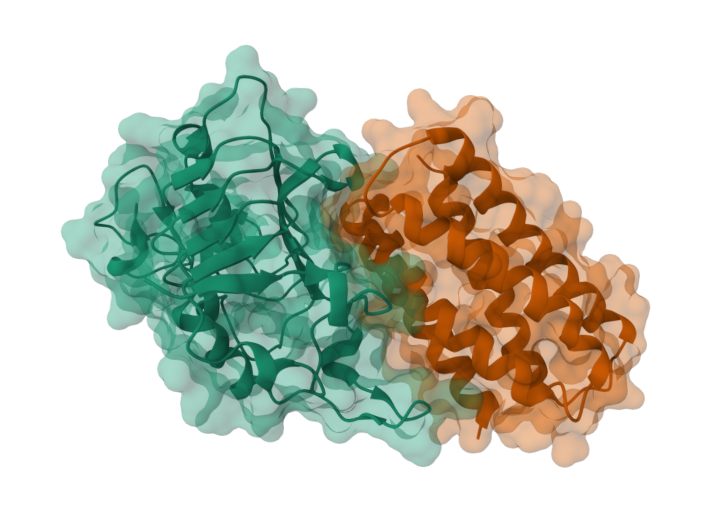
python examples/binder_design_fastplms.py \
  --target-name pd-l1 \
  --binder-name minibinder \
  --batch-size 4 \
  --steps 150 \
  --output-dir artifacts/binder-design
The workflow ranks candidates by mean iPTM across the approved critics after the minibinder isoelectric-point filter. These are model-based prioritization signals, not experimental evidence of affinity or specificity. See the complete workflow.
Runtime contract
- Public input: Raw amino-acid sequences or typed molecular-complex specifications; low-level forward accepts prepared feature tensors
- Advertised AutoClasses:
AutoConfig,AutoModel - AutoClass weight status:
AutoConfig=FastPLMs extension,AutoModel=pretrained - Attention implementations:
eager,sdpa,flex_attention - Precision policies:
auto,fp32,bf16,fp8(experimental) - BF16 execution:
fp32_parameters_autocast - Generation contract:
not_applicable - Optional dependency group:
structure - Weight publication allowed:
true - Weight license status:
resolved - Redistributable:
true - Complete weight publication required:
false
Provenance
- FastPLMs weights:
Synthyra/ESMFold2-Experimental-Cutoff2025@632ff4a9e68f1de78ee956a613267bdcdb5b354d - Runtime revision:
1b9ce023f1e06571cf3e6324be0610ffa53e0a4a - Runtime source-tree SHA-256:
15e781c5f1cd2ba8486e22076df15ffab37d3c00a689bf25280d803f2d60ee74 - Runtime bundle SHA-256:
278bb01ff0e426ae5f707c7a93ee720a0e87dfade5afb658921528d784720232 - Generator/schema version and complete/runtime-only attestations: recorded in
provenance.json - Official checkpoint:
biohub/ESMFold2-Experimental-Cutoff2025@56f94f5c1069ecde17512c96928850518340d287 - Artifact source:
fast - State transform:
identity - BF16 execution:
fp32_parameters_autocast - Pinned upstreams:
biohub-esm,biohub-transformers,protein-ttt - Reference container:
reference-esmfold2 - Release tiers:
check,compliance,structure,feature,artifact,benchmark - Unresolved required file identities:
0
The local artifact records exact file identities, conversion provenance, source
revisions, and legal texts in provenance.json. A nonzero unresolved count is a
release blocker.
Validation boundary
For tiers declared by the manifest, the release contract compares applicable semantic configuration, tokenizer behavior, state keys, shapes, dtypes, values, aliases, and representative inference with the pinned official implementation. This metadata does not by itself claim that a particular build passed, that one backend is faster, or that an output has biological or therapeutic validity.
License
Checkpoint terms: MIT. The Hub model-card identifier is
mit. Applicable source licenses, notices, attribution,
and conversion records are distributed with the local artifact. Review them
before use.