


The $4^{\text {th }}$ Romanian Master of Mathematics Competition - Solutions Day 1: Friday, February 25, 2011, Bucharest
Problem 1. Prove that there exist two functions
such that $f \circ g$ is strictly decreasing, while $g \circ f$ is strictly increasing. (Poland) Andrzej KomisArsKi & Marcin Kuczma
Solution. Let
Thus $A=2 B, B=2 A, A=-A, B=-B, A \cap B=\varnothing$, and finally $A \cup B \cup{0}=\mathbb{R}$. Let us take
Take $g(x)=2 f(x)$. Thus $f(g(x))=f(2 f(x))=-2 x$ and $g(f(x))=2 f(f(x))=2 x$.
Problem 2. Determine all positive integers $n$ for which there exists a polynomial $f(x)$ with real coefficients, with the following properties: (1) for each integer $k$, the number $f(k)$ is an integer if and only if $k$ is not divisible by $n$; (2) the degree of $f$ is less than $n$. (Hungary) GÉza Kós Solution. We will show that such polynomial exists if and only if $n=1$ or $n$ is a power of a prime.
We will use two known facts stated in Lemmata 1 and 2. Lemma 1. If $p^{a}$ is a power of a prime and $k$ is an integer, then $\frac{(k-1)(k-2) \ldots\left(k-p^{a}+1\right)}{\left(p^{a}-1\right)!}$ is divisible by $p$ if and only if $k$ is not divisible by $p^{a}$.
Proof. First suppose that $p^{a} \mid k$ and consider
In every fraction on the right-hand side, $p$ has the same maximal exponent in the numerator as in the denominator.
Therefore, the product (which is an integer) is not divisible by $p$.
Now suppose that $p^{a} \nmid k$. We have
The last fraction is an integer. In the fraction $\frac{p^{a}}{k}$, the denominator $k$ is not divisible by $p^{a}$. Lemma 2. If $g(x)$ is a polynomial with degree less than $n$ then
Proof. Apply induction on $n$. For $n=1$ then $g(x)$ is a constant and
Now assume that $n>1$ and the Lemma holds for $n-1$. Let $h(x)=g(x+1)-g(x)$; the degree of $h$ is less than the degree of $g$, so the induction hypothesis applies for $g$ and $n-1$ :
Lemma 3. If $n$ has at least two distinct prime divisors then the greatest common divisor of $\binom{n}{1},\binom{n}{2}, \ldots,\binom{n}{n-1}$ is 1 .
Proof. Suppose to the contrary that $p$ is a common prime divisor of $\binom{n}{1}, \ldots,\binom{n}{n-1}$. In particular, $p \left\lvert,\binom{ n}{1}=n\right.$. Let $a$ be the exponent of $p$ in the prime factorization of $n$. Since $n$ has at least two prime divisors, we have $1<p^{a}<n$. Hence, $\binom{n}{p^{a}-1}$ and $\binom{n}{p^{a}}$ are listed among $\binom{n}{1}, \ldots,\binom{n}{n-1}$ and thus $p \left\lvert,\binom{ n}{p^{a}}\right.$ and $p \left\lvert,\binom{ n}{p^{a}-1}\right.$. But then $p$ divides $\binom{n}{p^{a}}-\binom{n}{p^{a}-1}=\binom{n-1}{p^{a}-1}$, which contradicts Lemma 1.
Next we construct the polynomial $f(x)$ when $n=1$ or $n$ is a power of a prime.
For $n=1, f(x)=\frac{1}{2}$ is such a polynomial. If $n=p^{a}$ where $p$ is a prime and $a$ is a positive integer then let
The degree of this polynomial is $p^{a}-1=n-1$. The number $\frac{(k-1)(k-2) \cdots\left(k-p^{a}+1\right)}{\left(p^{a}-1\right)!}$ is an integer for any integer $k$, and, by Lemma 1 , it is divisible by $p$ if and only if $k$ is not divisible by $p^{a}=n$.
Finally we prove that if $n$ has at least two prime divisors then no polynomial $f(x)$ satisfies $(1,2)$. Suppose that some polynomial $f(x)$ satisfies (1,2), and apply Lemma 2 for $g=f$ and $x=-k$ where $1 \leq k \leq n-1$. We get that
Since $f(-k), \ldots, f(-1)$ and $f(1), \ldots, f(n-k)$ are all integers, we conclude that $\binom{n}{k} f(0)$ is an integer for every $1 \leq k \leq n-1$. By dint of Lemma 3, the greatest common divisor of $\binom{n}{1},\binom{n}{2}, \ldots,\binom{n}{n-1}$ is 1 . Hence, there will exist some integers $u_{1}, u_{2}, \ldots, u_{n-1}$ for which $u_{1}\binom{n}{1}+\cdots+u_{n-1}\binom{n}{n-1}=1$. Then
is a sum of integers. This contradicts the fact that $f(0)$ is not an integer. So such polynomial $f(x)$ does not exist.
Alternative Solution. (I. Bogdanov) We claim the answer is $n=p^{\alpha}$ for some prime $p$ and nonnegative $\alpha$.
Lemma. For every integers $a_{1}, \ldots, a_{n}$ there exists an integervalued polynomial $P(x)$ of degree $<n$ such that $P(k)=a_{k}$ for all $1 \leq k \leq n$.
Proof. Induction on $n$. For the base case $n=1$ one may set $P(x)=a_{1}$. For the induction step, suppose that the polynomial $P_{1}(x)$ satisfies the desired property for all $1 \leq k \leq n-1$. Then set $P(x)=P_{1}(x)+\left(a_{n}-P_{1}(n)\right)\binom{x-1}{n-1}$; since $\binom{k-1}{n-1}=0$ for $1 \leq k \leq n-1$ and $\binom{n-1}{n-1}=1$, the polynomial $P(x)$ is a sought one.
Now, if for some $n$ there exists some polynomial $f(x)$ satisfying the problem conditions, one may choose some integer-valued polynomial $P(x)$ (of degree $<n-1$ ) coinciding with $f(x)$ at points $1, \ldots, n-1$. The difference $f_{1}(x)=$ $f(x)-P(x)$ also satisfies the problem conditions, therefore we may restrict ourselves to the polynomials vanishing at points $1, \ldots, n-1-$ that are, the polynomials of the form $f(x)=c \prod_{i=1}^{n-1}(x-i)$ for some (surely rational) constant $c$.
Let $c=p / q$ be its irreducible form, and $q=\prod_{j=1}^{d} p_{j}^{\alpha_{j}}$ be the prime decomposition of the denominator.
- Assume that a desired polynomial $f(x)$ exists. Since $f(0)$ is not an integer, we have $9 \nmid(-1)^{n-1}(n-1)$ ! and hence $p_{j}^{\alpha_{j}} \nmid(-1)^{n-1}(n-1)$ ! for some $j$. Hence
therefore $f\left(p_{i}^{\alpha_{i}}\right)$ is not integer, too. By the condition (i), this means that $n \mid p_{i}^{\alpha_{i}}$, and hence $n$ should be a power of a prime. 2. Now let us construct a desired polynomial $f(x)$ for any power of a prime $n=p^{\alpha}$. We claim that the polynomial
fits. Actually, consider some integer $x$. From the first representation, the denominator of the irreducible form of $f(x)$ may be 1 or $p$ only. If $p^{\alpha} \nmid x$, then the prime decomposition of the fraction $n /(p x)$ contains $p$ with a nonnegative exponent; hence $f(x)$ is integer. On the other hand, if $n=p^{\alpha} \mid x$, then the numbers $x-1, x-2, \ldots, x-(n-1)$ contain the same exponents of primes as the numbers $n-1, n-2, \ldots, 1$ respectively; hence the number
is not divisible by $p$. Thus $f(x)$ is not an integer. Problem 3. A triangle $A B C$ is inscribed in a circle $\omega$. A variable line $\ell$ chosen parallel to $B C$ meets segments $A B$, $A C$ at points $D, E$ respectively, and meets $\omega$ at points $K, L$ (where $D$ lies between $K$ and $E$ ). Circle $\gamma_{1}$ is tangent to the segments $K D$ and $B D$ and also tangent to $\omega$, while circle $\gamma_{2}$ is tangent to the segments $L E$ and $C E$ and also tangent to $\omega$. Determine the locus, as $\ell$ varies, of the meeting point of the common inner tangents to $\gamma_{1}$ and $\gamma_{2}$. (Russia) VASily Mokin & Fedor IvLev Solution. Let $P$ be the meeting point of the common inner tangents to $\gamma_{1}$ and $\gamma_{2}$. Also, let $b$ be the angle bisector of $\angle B A C$. Since $K L | B C, b$ is also the angle bisector of $\angle K A L$.
Let $\mathfrak{H}$ be the composition of the symmetry $\mathfrak{S}$ with respect to $b$ and the inversion $\mathfrak{I}$ of centre $A$ and ratio $\sqrt{A K \cdot A L}$ (it is readily seen that $\mathfrak{S}$ and $\mathfrak{I}$ commute, so since $\mathfrak{S}^{2}=\mathfrak{I}^{2}=$ id, then also $\mathfrak{H}^{2}=\mathrm{id}$, the identical transformation). The elements of the configuration interchanged by $\mathfrak{H}$ are summarized in Table I.
Let $O_{1}$ and $O_{2}$ be the centres of circles $\gamma_{1}$ and $\gamma_{2}$. Since the circles $\gamma_{1}$ and $\gamma_{2}$ are determined by their construction (in a unique way), they are interchanged by $\mathfrak{H}$, therefore the rays $A O_{1}$ and $A O_{2}$ are symmetrical with respect to $b$. Denote by $\rho_{1}$ and $\rho_{2}$ the radii of $\gamma_{1}$ and $\gamma_{2}$. Since $\angle O_{1} A B=\angle O_{2} A C$, we have $\rho_{1} / \rho_{2}=A O_{1} / A O_{2}$. On the other hand, from the definition of $P$ we have $O_{1} P / O_{2} P=$ $\rho_{1} / \rho_{2}=A O_{1} / A O_{2}$; this means that $A P$ is the angle bisector of $\angle O_{1} A O_{2}$ and therefore of $\angle B A C$.
The limiting, degenerated, cases are when the parallel line passes through $A$ - when $P$ coincides with $A$; respectively when the parallel line is $B C$ - when $P$ coincides with the foot $A^{\prime} \in B C$ of the angle bisector of $\angle B A C$ (or any other point on $B C$ ). By continuity, any point $P$ on the open segment $A A^{\prime}$ is obtained for some position of the parallel, therefore the locus is the open segment $A A^{\prime}$ of the angle bisector $b$ of $\angle B A C$.
| point $K$ | $\longleftrightarrow$ | point $L$ |
|---|---|---|
| line $K L$ | $\longleftrightarrow$ | circle $\omega$ |
| ray $A B$ | $\longleftrightarrow$ | ray $A C$ |
| point $B$ | $\longleftrightarrow$ | point $E$ |
| point $C$ | $\longleftrightarrow$ | point $D$ |
| segment $B D$ | $\longleftrightarrow$ | segment $E C$ |
| $\operatorname{arc} B K$ | $\longleftrightarrow$ | segment $E L$ |
| $\operatorname{arc} C L$ | $\longleftrightarrow$ | segment $D K$ |
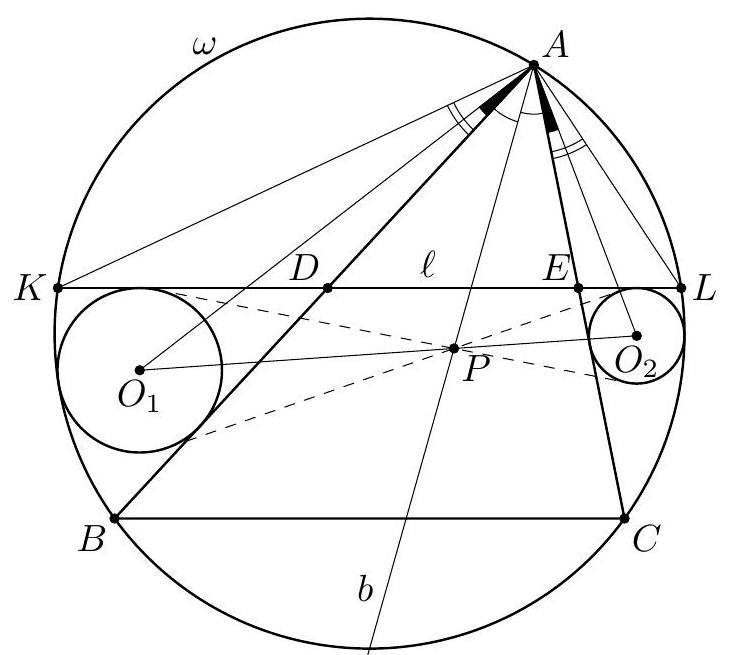
TABLE I: Elements interchanged by $\mathfrak{H}$.